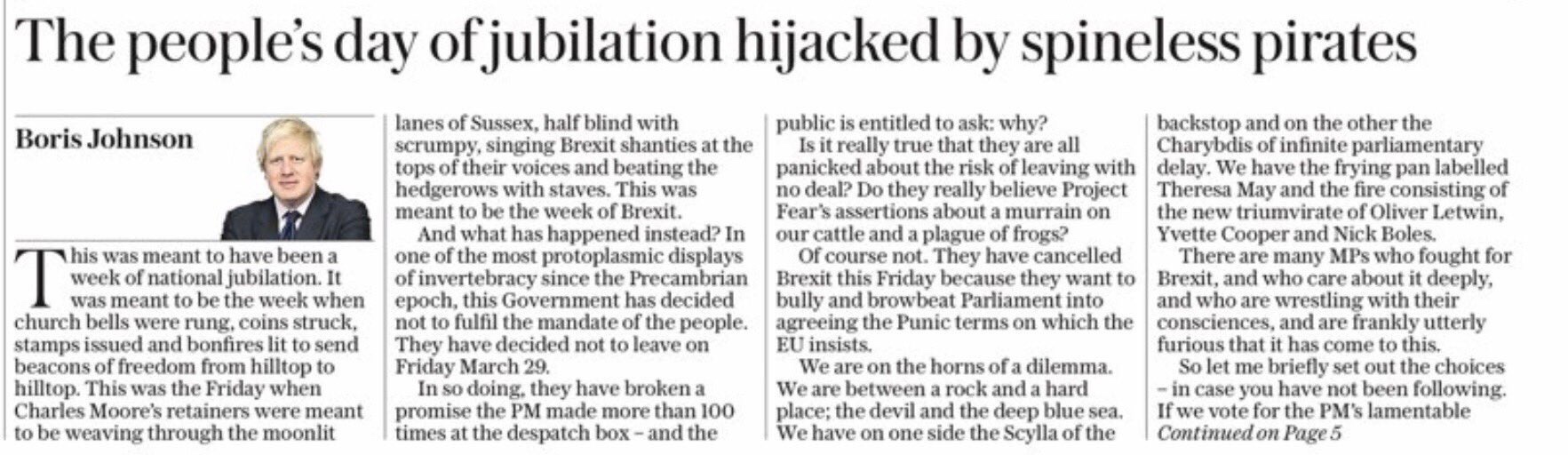
Early comments by Johnson on the impact of no-deal Brexit

Fully consistent with what the PM is saying now:

There came two other gentlemen, one of whom uttered the common-place complaints, that by the increase of taxes, labour would be dear, other nations would undersell us, and our commerce would be ruined.

JOHNSON (smiling). ‘Never fear, Sir. Our commerce is in a very good state; and suppose we had no commerce at all, we could live very well on the produce of our own country.’

This was Samuel Johnson, in the 1770s, who also wrote that

The interruption of trade, though it may distress part of the community, leaves the rest power to communicate relief; the decay of one manufacture may be compensated by the advancement of another…

Johnson, of course, also famously said that “patriotism is the last refuge of the scoundrel.” Which may somehow be relevant.

De Gaulle’s final vindication

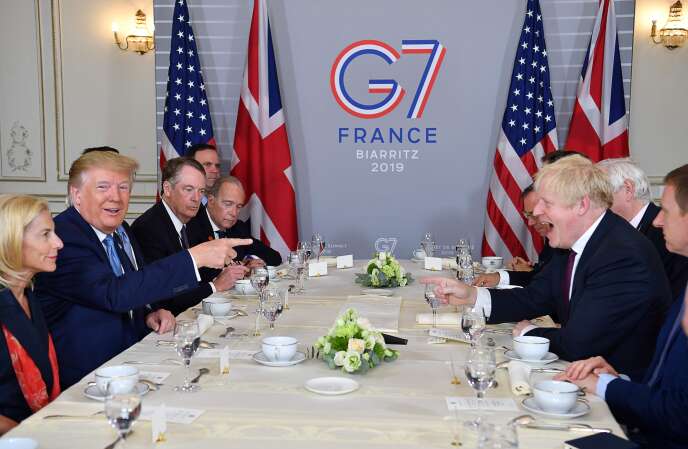
De Gaulle famously opposed British entry into the European Common Market, in part because of fear that the UK would serve as a stalking horse for the US. Now the UK is withdrawing from the EU to chase after its unrequited transatlantic crush. And this photo from Le Monde shows the penultimate stage of the drama. The body language is telling. Trump is relaxed, Johnson the overeager schoolboy trying to suck up to the teacher.

I know that public figures are often caught in awkward postures by photographers, but I can’t imagine any person with a shred of self-respect — not to mention any respect for the country he is supposed to be representing — mugging like this in public.

AFP Nicholas Kamm

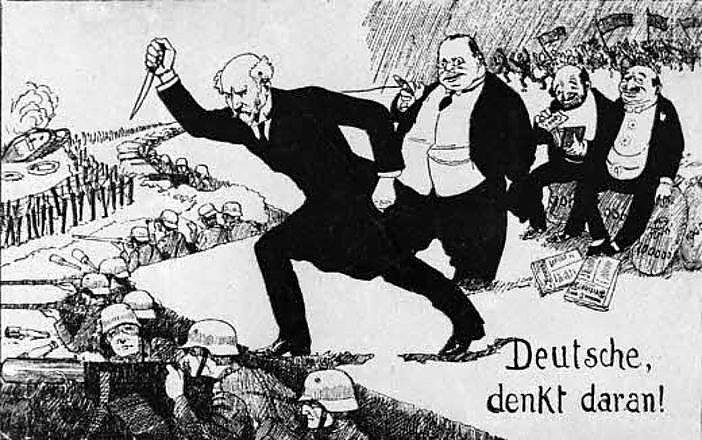
Writing the Dolchstoßlegende in English

What Johnson wants is for one of two things to happen:

  1. No deal, with blame falling both on the obstreperous, sclerotic, backward-looking EU, and on the traitorous socialists who weakened Britain’s negotiating position from within by suggesting they would block no-deal in any case. We would have had the perfect buccaneering Brexit deal with complete access to European markets, if we hadn’t been betrayed;
  2. A deal that is forced upon the government by the same traitors in parliament.

In either case Johnson then hopes to win a new election by campaigning against the traitors. It’s even better (but riskier) if the country is in chaos because of no-deal Brexit.

No one who actually hoped to make a deal would publicly declare that the other side must entirely abandon one of its key demands, that had already been conceded by a previous UK government, and suggest that their opposition is only a public negotiating posture. But it’s a perfectly good way of provoking a crisis, while allowing low-information voters to believe that he’s really tried everything. Continue reading “Writing the Dolchstoßlegende in English”

Jerry Garcia on heroin and Brexit

I think often of an interview with Jerry Garcia that I read in 1987, when the Grateful Dead had rebounded and gone back out on tour following Garcia’s brush with death: A combination of diabetes and heroin addiction had landed him in a coma, and for a while it wasn’t clear if he would ever be able to play guitar again. Anyway, the interviewer asked him directly about his addiction, and he said (approximately; I don’t have the original text) “You come to drugs with your problems. And after a while the problems fade away, and it’s just you and the drugs.”

And similarly Brexit. Britain came to Brexit with lots of serious problems: housing shortage, inequality, underfunded health service, declining influence in the world and uncertainty about what global role it should or could aspire to. Brexit doesn’t solve these problems, but they’ve faded away. Now it’s just us and Brexit.

Moon over Brussels

Brexit secretary David Davis, June 2017:

Half of my task is running a set of projects that make the NASA moon shot look quite simple.

And now, soon-to-be-prime-minister-select Boris Johnson:

Boris Johnson: ‘can-do spirit’ can solve problem of Irish border

Favourite to be PM compares Brexit to mission to put astronauts on moon in 1969

There is no task so simple that government cannot overcomplicate if it doesn’t want to do it.

Brexit has gone in two years from being as complicated as the first moon landing to being… as easy as the first moon landing. Continue reading “Moon over Brussels”

Magic and class struggle

I just started reading the book Magic for Liars by Sarah Galley. I’d purchased it because of a short review, but by the time I got to read it I’d completely forgotten anything about it, so I was bemused to discover that it is sort of a hard-boiled detective murder mystery set in a boarding school for young magicians. It struck me then how odd it is that “boarding school for young magicians” has turned into a whole genre, spanning a range of works for young people and adults, and now starting to colonise completely different genres, like detective fiction.

So far as I can tell this is largely an Anglo-American literary phenomenon (though Harry Potter is certainly very popular throughout the world), and I suspect that it reflects a natural response to the class system and the power that is accrues to elite education. Surely an uneducated Briton, seeing how a mediocrity like Boris Johnson can be elevated to a position of power on the basis of pairing his hail-fellow-well-met demeanour with the Eton-Oxford training can’t really imagine what they’re learning there, but supposes it must be some sort of deep magic. That’s why the spells in Harry Potter are all Dog Latin: Unexceptional people go to these weird schools, learn these dead languages, and end up ruling the world.

Update: I have deleted a comment asserting a common etymology of magic spell and spelling (learning to write). The words (as Maria Christodoulou pointed out) in fact have completely different roots. (I’m not sure where I got this false etymology from. I would have sworn it was Mary Daly, but while Gyn/Ecology has lots of (sometimes dubious) wordplay on spell and glamour, the association spell-witchcraft-learning is not there.

Johnson is our doom

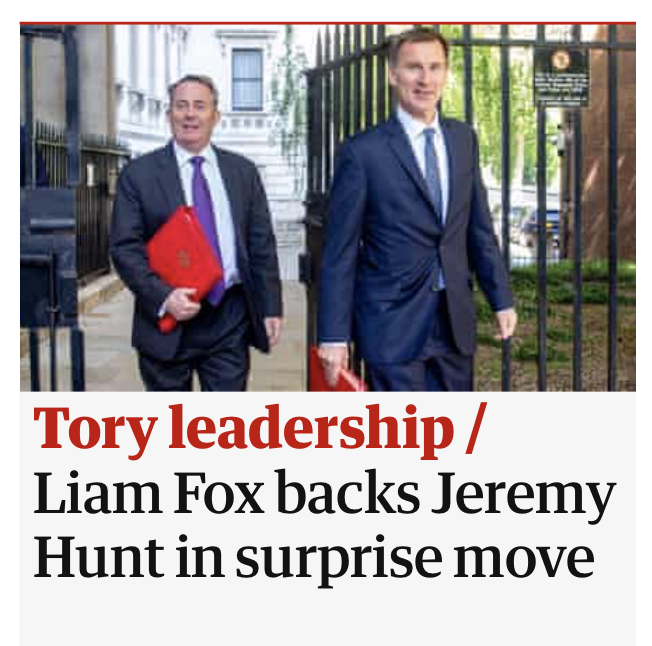
Is there somewhere an ancient manuscript sealed with eldritch lore, on which is inscribed the tale of the final days of Britain, under the rule of a mysterious BJ? I have had the feeling, over the past four years that the real agenda of government has been to evade the doom foretold of the Boris Johnson premiership. And, as in classical tragedy, the steps that are taken to prevent that fate — the Brexit referendum, Theresa May’s selection as prime minister, making him responsible for foreign policy, expelling him from the cabinet, new elections — turn out to be precisely the ones that bring it closer. At this point I could understand if some Conservatives are ready to give up fighting what is obviously a divinely ordained chastisement.

The time lords

The European parliament has voted to stop the practice of switching clocks forward and backward every year, from 2021. I’ve long thought this practice rather odd. Imagine that a government were to pass a law stating that from April 1 every person must wake up one hour earlier than they habitually do, and go to sleep one hour earlier. All shops and businesses are required to open an hour earlier, and to close an hour earlier. The same for schools, universities, and the timing of private lessons and appointments must also be shifted. Obviously ridiculous, even tyrannical. The government has nothing to say about when I go to bed or wake up, when my business is open. But because they enforce it through adjusting the clocks, which seem like an appropriate subject of regulation and standardisation, it is almost universally accepted.

But instead of praising this blow struck for individual freedom and against statist overreach, we have Tories making comments like this:

John Flack, the Conservative MEP for the East of England, said: “We’ve long been aware the EU wants too much control over our lives – now they want to control time itself. You would think they had other things to worry about without wanting to become time lords,” he said, in an apparent reference to the BBC sci-fi drama Doctor Who.

“We agreed when they said the clocks should change across the whole EU on an agreed day. That made sense – but this is a step too far,” Flack added. “I know that farmers in particular, all across the east of England, value the flexibility that the clock changes bring to get the best from available daylight.

So, the small-government Tory thinks it’s a perfectly legitimate exercise of European centralised power to compel shopkeepers in Sicily and schoolchildren in Madrid to adjust their body clocks* in order to spare English farmers the annoyance of having to consciously adjust the clocktime when they get out of bed to tend to their harvest. But to rescind this compulsion, that is insufferably arrogant.

*Nor is this a harmless annoyance. Researchers have found a measurable increase in heart attacks — presumed attributable to reduced sleep — in the days following the spring clock shift. A much smaller decrease may accompany the autumn shift back.