
No booster [update 10-12-2021]

The UK government is apparently desperately eager to get the whole population fully protected with three doses of Covid vaccine, to try and head off the mounting omicron wave. In a particularly awkward mixed pharmaceutical metaphor they promised to put the programme “on steroids”. But not so eager that they’re willing to resort to extreme measures like… just letting people get vaccinated.

The NHS website says people will be contacted for appointments six months after their second dose. But the government announced more than a week ago, following new advice from the Joint Committee on Vaccinations and Immunisations (JCVI), that “the booster will now be given no sooner than 3 months after the primary course.”

Having been initially vaccinated in Germany I can’t get on the list for an appointment anyway, so I decided to cycle down to Kassam Stadium, south of Oxford, the only nearby vaccination centre offering walk-in service. The fellow managing the queue was friendly and helpful, but told me that the current regulation — until they get new rules from the government — is actually a completely arbitrary seeming five months gap for people over 50 years of age (which I haven’t seen reported anywhere) — and six months for people over 40. (And no boosters for younger people.

So, no booster yet for me…

Update (8/12/2021): The NHS has now opened up boosters to people who had their second dose more than 3 months ago. Except, the bad people who had their first doses in foreign lands — including, if I understand correctly, Scotland — are still excluded.

[update 10-12-2021]: Yesterday mid-afternoon the official NHS website for vaccination information reported that anyone over 40 could get a booster at a walk-in site 3 months after their second dose. So I cycled down to Kassam Stadium again this morning. And again I was turned away. This time they agreed that I was eligible according to the NHS rules, but they have their own rules at this centre, and they’re not changing until Monday.

Not that it matters, because they also — my partner found this out when she went in the afternoon — decided spontaneously as of 2pm today to stop accepting walk-ins at all.

WHO’s on first?

I’m all in favour of naming Covid variants after Greek letters — not least because there is a fixed number of them, so when we teach omega presumably we know we’re finished. Clearly, though, people at WHO recognised that alphabetical order needed to be superseded when the next major horror was due to be designated Nu. I’m sure the WHO was seeking to head off the following awkward conversation a few months from now:

Have you heard the news about Covid?

What’s that?

About the new Covid variant?

Sure. I had it a couple of months ago.

You can’t have had it a couple of months ago. It’s new.

Nu. That’s what I said. It knocked me out for a week.

That’s the old variant.

Wait, the nu variant is old?

That’s right.

Hold on a minute. How many variants have you got?

Well, you got your alpha variant, your delta variant, then your nu variant, and then this here variant that got discovered just recently.

It’s pretty new isn’t it. Kind of like a new variant.

Oh, no, the experts on TV say it had twenty different mutations from the nu variant.

So if I came down with this… novel variant, and I went to the hospital, and they sequenced the virus, could they tell me which variant I have?

Sure.

And what would they tell me?

They’d tell you you have the new variant. No reason to keep it secret.

And if it’s not that one?

Then it’s probably the nu variant.

But it’s the old variant.

Certainly.

Called the new variant.

WHO calls out that.

WHO?

Exactly.

The de-wormer turns

Apparently, a conference in Florida to promote the use of anti-parasite treatment Ivermectin for Covid, turned into a super-spreader event.

“I have been on ivermectin for 16 months, my wife and I,” Dr Bruce Boros told the audience at the event held at the World Equestrian Center in Ocala, adding: “I have never felt healthier in my life.”

Boros is now reported to be gravely ill with Covid, and at least six other physicians who attended were also infected. It seems to me, if you don’t want people to dismiss your miracle treatment as “horse de-wormer”, you might choose to hold your national gathering somewhere that is not an equestrian center.

Industrial heritage

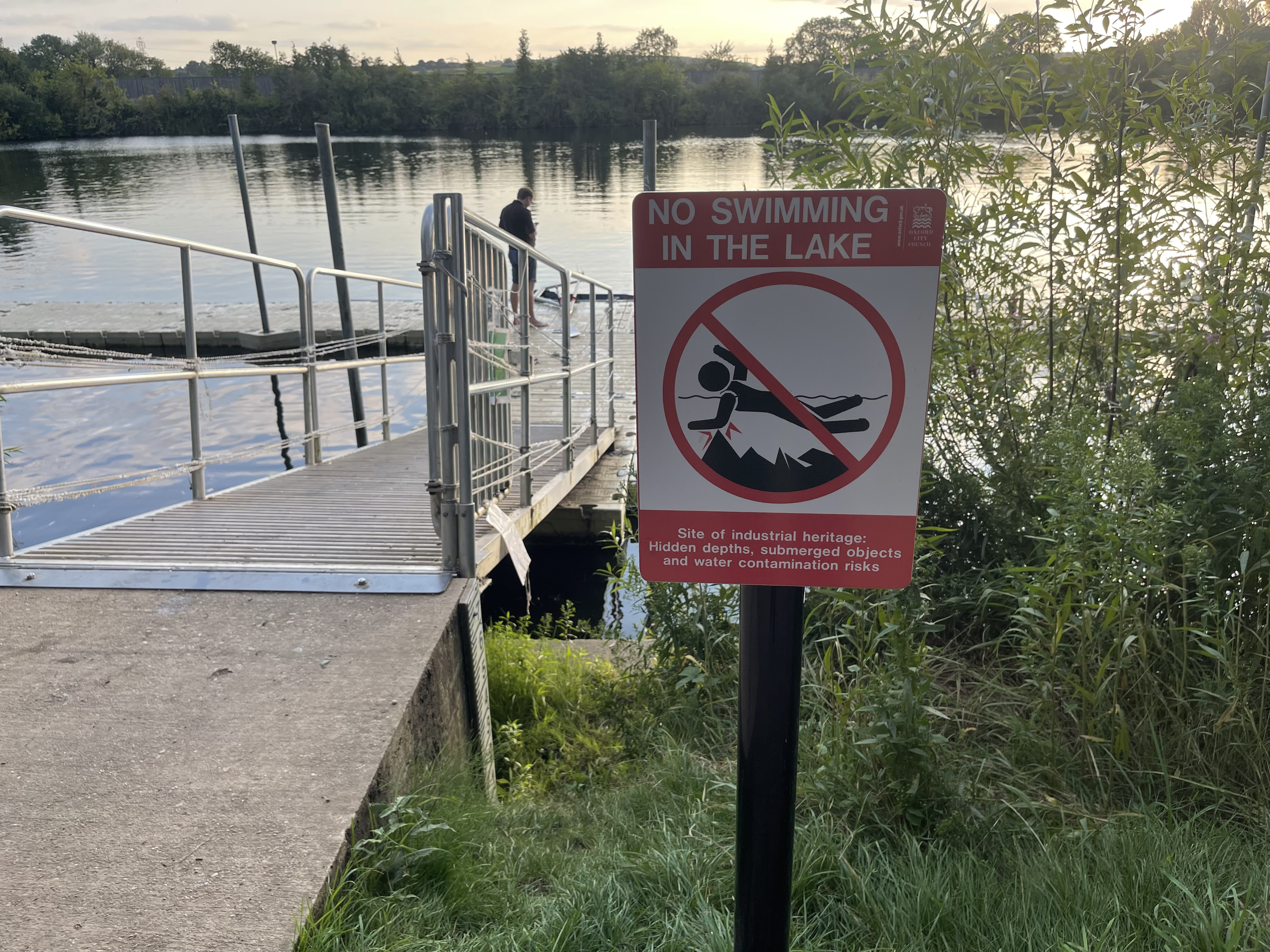
There’s a tiny lake in Oxford, Hinksey Lake, between a park and the railway tracks, somewhat used for recreation. I was there recently for the first time since the start of the pandemic. I found there were new signs warning people away from swimming — too little avail, as far as I could see — because of the danger of industrial waste dumped below the surface. I could think of many things you might call such a location, such as a “hazardous waste site” or “industrial trash dump”. But in Oxford they call it a “site of industrial heritage”. Sounds like something you might want to make a point of visiting.

Neanderthals and women

The article seems to have good intentions, but this headline in today’s Guardian is the most sexist I’ve seen in some time. It sounds like the men were hard at work “creating language”, and some women helped out with some testing, and maybe brought snacks. Also some Neanderthals came by and lent a hand. And apes.

Transferable skills

The US federal government has ordered that all nursing home personnel need to be vaccinated against Covid, which seems like an absolute least-you-could-do sort of measure, given the extraordinary risk of outbreaks among the frail elderly. But there’s a problem.

The American Health Care Association, a nursing home lobby, said it appreciated the order but that the mandate should apply to other healthcare providers as well so that workers who refuse vaccination won’t have a reason to change jobs within the industry.

Surely there can’t be that many openings for medical staff who aren’t willing to take minimal steps to protect their patients? Well…

David Grabowski, a professor of healthcare policy at Harvard Medical School, said that, because many nursing home aides are paid only the minimum wage or slightly higher, they would be more likely to seek out work at retail establishments. “The risk isn’t that they go to the hospital down the street—the risk is they go to Starbucks or Target,” he said in an interview. “It’s great if you want to mandate the vaccine, but you also want to make sure these workers are making a living wage.”

Hmm… if Starbucks is hiring unvaccinated care-home nurses to sling lattes for the same salary, there must be some vaccinated baristas who want to transfer in the other direction. What’s that you say? You can’t just hire any bored 20-year-old to care for the elderly? You need training and experience to do the nursing job, and it’s a far more gruelling job!

Then why are they earning the same salary? Low salaries are not immutable constants of nature, however much employers would like to suggest they are. Like

Jon Green, CEO of Pinewood Manor Nursing and Rehabilitation in rural Hawkinsville, Georgia, said the “vaccines are necessary for control of the virus,” but “if we would have mandated it ourselves, it would have caused [many workers] to leave.’’

Anglophone exceptionalism

Guardian film reviewer Peter Bradshaw does not like the new French film Deception, directed by Arnaud Desplechin, based on one of Philip Roth’s many pseudo-autobiographical novels. And one of the things he really doesn’t like about this French film is that… it’s French.

Desplechin doesn’t change any nationalities. His Roth is still supposed to be American, and the object of his love is still English. But Desplechin casts French people, speaking French. Denis Podalydès plays Roth and Léa Seydoux is the English actor.  So the fundamentally important, dramatically savoury difference between them is obliterated.

C’est pas vrai! A French director cast French actors in his film, and let them (I’m trying not to hyperventilate here) speak FRENCH! How could this be allowed to happen? He seems to have gotten the Hollywood rule, that European characters (of whatever nationality) are always supposed to be played by British actors, exactly backward!

Could you imagine a critic commenting on a film by a British or American director set in a non-English-speaking country, that complains that the director cast British or American actors speaking English, which completely misses the nuances of dialect differences?

Spielberg doesn’t change any nationalities. His Schindler is still supposed to be Moravian, and his antagonist Amon Göth is still Austrian. But Spielberg casts British people, speaking English. Liam Neeson plays Schindler and Ralph Fiennes is the Austrian Nazi.  So the fundamentally important, dramatically savoury difference between them is obliterated.

I mention this particular example because I do recall seeing a German review of Schindler’s List that did complain about the dialect issue, but only as an issue about the dubbing by the regular German representatives of those particular British actors, speaking their regular high German. No one would have suggested that an American director really should have made his film in German to begin with.

Update on Delta in Germany

The Robert Koch Institute produces estimates of variants of concern on Wednesdays. My projection from two weeks ago turns out to have been somewhat too optimistic. At that point I remarked that there seemed to be about 120 delta cases per day, and that that number hadn’t been increasing: The dominance of delta was coming from the reduction of other cases.

This no longer seems to be true. According to the latest RKI report, the past week has seen only a slight reduction in total cases, compared to two weeks ago, to about 604/day. And the proportion of delta continues to double weekly, so that we’re now at 59%, meaning almost 360 Delta cases/day. The number of Delta cases has thus tripled in two weeks, while the number of other cases has shrunk by a similar factor. The result is a current estimated R0 close to 1, but a very worrying prognosis. We can expect that in another two weeks, if nothing changes, we’ll have 90% Delta, around 1100 cases in total, and R0 around 1.6.

Of course, vaccination is already changing the situation. How much? By the same crude estimate I used last time — counting single vaccination as 50% immune, and looking back 3 weeks (to account for the 4 days back to the middle of the reporting period, 10 days from vaccination to immunity, and another 7 days average for infections to turn into cases), the above numbers apply to a 40% immune population. Based on vaccinations to date the population in 2 weeks will be 46% immune, reducing the R0 for Delta to around 1.5. In order to push it below 1.0 we would need to immunise 1/3 of the remaining population, so we need at least 64% fully immunised. At the current (slowed) rate of vaccination, if it doesn’t decelerate further, that will take until around the middle of September, by which point we’ll be back up around 10,000 cases/day.

Delta may not mean change

Germany is in a confusing place with its pandemic developments. Covid cases have been falling as rapidly here as they have been rising in the UK: More than 50% reduction in the past week, dropping the new cases to 6.6 per 100,000 averaged over the week, under 1000 cases per day for the first time since the middle of last summer. At the same time, the Delta variant is rapidly taking over. Last week the Robert Koch Institute reported 8%, this week it’s 15%. Virologist Christian Drosten, speaking on the NDW Coronavirus podcast this week (before the new Delta numbers were available) spoke of the 80% level in England that, he said, marked the watershed between falling and rising case numbers.

I think this is the wrong back-of-the-envelope calculation, because it depends on the overall expansion rate of the virus, and the difference between Delta and Alpha, which is likely particularly large in the UK because of the large number of people who have received just one AstraZeneca dose, which seems to be particularly ineffective against Delta. There’s another simple calculation that we can do specifically for the German situation: In the past week there have been about 810 cases per day, of which 15.1% Delta, so, about 122 Delta cases per day. The previous week there were about 1557 cases per day, of which 7.9% Delta, so also about 123 Delta cases. That suggests that under current conditions (including weather, population immunity, and social distancing) Delta is not expanding. This may mean that current conditions are adequate to keep Delta in check, while Alpha and other variants are falling by more than 50% per week.

This suggests a very optimistic picture: that total case numbers will continue to fall. Within a few weeks Delta will be completely dominant, but the number of cases may not be much more than around 100 per day. And that ignores the increasing immunity: The infections reported this week occurred in the previous week, and the immunity is based on the vaccinations two weeks before that. With about 1% of the population being vaccinated every day, we should have — relative to the approximately 70% non-immune population* 20 days ago — already have about 15% reduced transmission by the first week in July. And at current vaccination rates we can expect, by the end of July that will be 30% reduced, providing some headroom for further relaxation of restrictions without an explosion of Delta cases.

That does raise the question, though, of why the general Covid transmission rate in Germany seems to be lower than in the UK. I don’t see any obvious difference in the level of social-distancing restrictions. Is it just the difference between single-dose AZ versus Biontech? If so, we should see a rapid turnaround in the UK soon.

* I’m very roughly counting each dose as 50% immunity.