
Mathematics and Meditation

Womb Realm Mandala

Sure, they’re both four-syllable words starting with M*, but do they have anything else in common?

Actually, quite a lot. They’re both ancient mental technologies for refining the mind’s ability to focus and grasp what is fundamentally ineffable: for mathematics this is space, motion, and quantity (or number); for meditation (I’m thinking here of Buddhist jhana meditation) it is the nature of mind and thought itself. Both require many years of intensive training and apprenticeship, often focusing on learning to solve a set of standard problems and carry out fixed exercises and incantations (QED, induction on n, proof by contradiction; buddham saranam gacchami). The practitioners of both are generally viewed as weird and otherworldly, and advanced practitioners demonstrate their mastery with bizarrely abstruse feats such as proving that all integers can be represented as a sum of a finite number of primes, or spending long periods of time in trance states, or levitating.

There is some direct overlap as well. Meditative practices often draw on geometric motifs — as in the mandala above — and arithmetic relations. Many chants are built on combinatorial principles. More specifically, the last of the five jhana factors is ekagatta, often translated as ‘one-pointedness’. This is typically interpretted as identification of mind and object, but the Pali word is purely geometric: eka (one) agga (point) ta (state). Viewed from a mathematical perspective you can see that the focusing of consciousness to a point can happen continuously, through contraction, or discretely, through reduction of dimension. It is possible to experience the mind as a geometric space, whose dimension can be reduced through concentration.

Presumably it’s just a coincidence, but I find it fascinating that the modern systematic approach to numbers is often attributed to the work of Euclid, in the early 3rd century BCE, shortly after Indian influences started to filter into Greek philosophy, particularly through the thought of skeptics such as Pyrrho of Ellis.

* Reminding me obliquely of the report I heard on the radio in Germany about 20 years ago about the efforts in Germany to establish mediation as an alternative path for dispute resolution. The expert bemoaned the lack of understanding that the general public had of mediation, claiming that many people thought it was some sort of esoteric process, because they confused the word with meditation. (The German words are the same as the corresponding English words.) That is, at least, a problem I’ve never had with the word mathematics.
Socialist maths

The recent decision by the state of Florida to ban a slew of mathematics textbooks from its schools because of their links to banned concepts has attracted much attention. The website Popular Information has pored through the banned texts to try and suss out what the verboten ideological content might be. Some books seem to have impermissably encouraged students to work together and treat each other with respect. Another may have set off alarms because it included, among its capsule biographies of mathematicians, some non-white individuals.

I’ve always wondered, though, why it’s not considered problematic that books persistently teach the concept of division with problems that require that a fixed amount of wealth — 10 cookies, say — be allocated equally among a group of children. No consideration of whether some of the children might be smarter, or work harder, or just be closer to the cookie jar, and thus be entitled to a larger share. Pretty much the definition of socialism!

(More generally, it always fascinated me, in my years spent as an observer on the playground, that it was taken for granted that toddlers were always being pressured to share their toys, and learning to share was seen as a developmental milestone, where we do not expect adults to be willing or able to share anything at any time.)

Bergson and Brexit

Once it became clear that I would be staying indefinitely in the UK, I had long planned to apply for UK citizenship. I am a strong believer in democracy, and I thought it would be the good and responsible thing to vote and otherwise take part in politics.

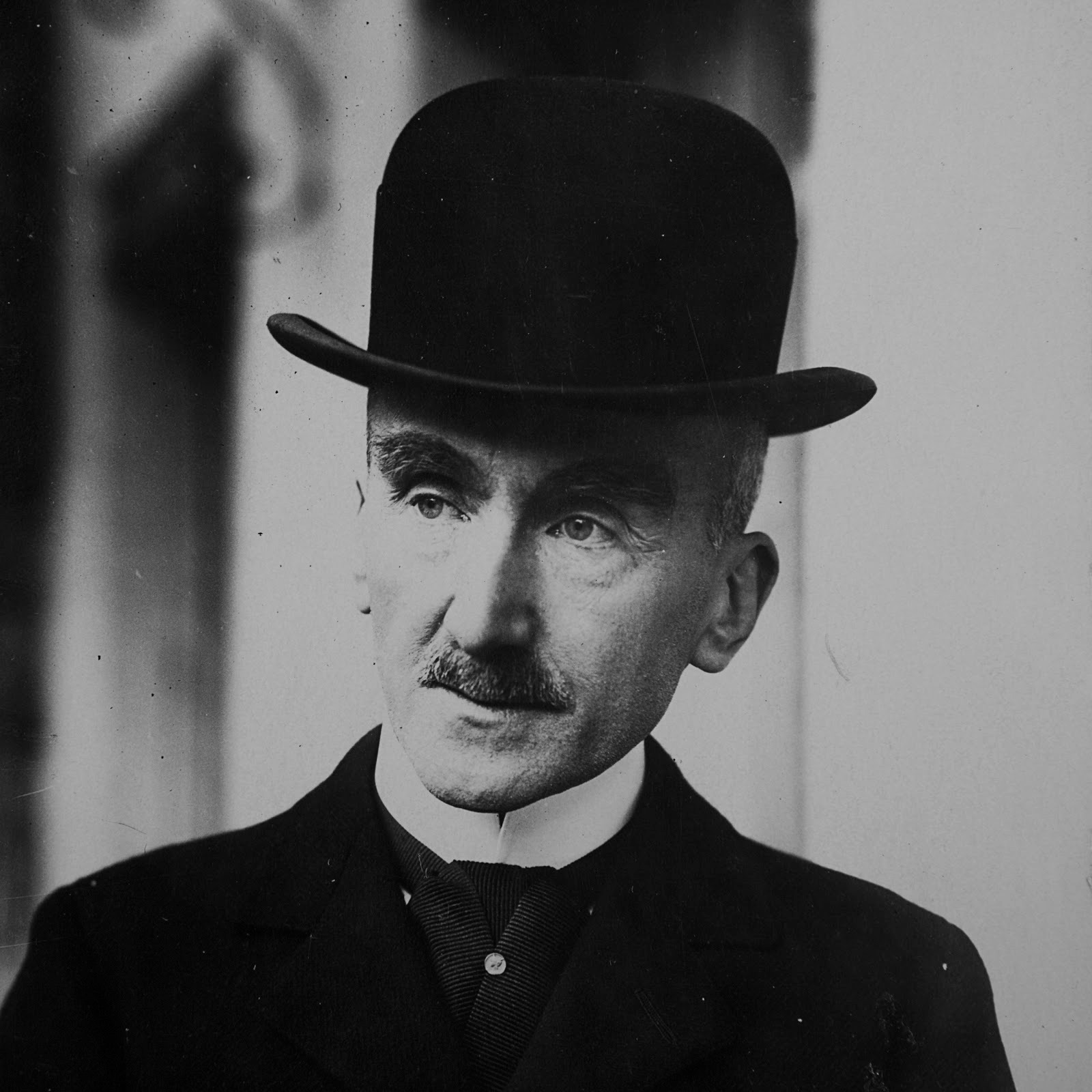
Then came Brexit, and this, naturally, led me to think about Henri Bergson. Born to a Jewish family, Bergson moved gradually toward Christianity in his personal life, he considered himself a Christian from the early 1920s. By the 1930s he was making plans to convert formally to Catholicism, but held off because of solidarity with the increasingly threatened Jewish community. A few weeks before his death, Bergson left his sickbed — having rejected an offered exemption from the anti-Semitic laws of Vichy — to stand in line to register as a Jew.

He wrote in his will:

My reflections have led me closer and closer to Catholicism, in which I see the complete fulfillment of Judaism. I would have become a convert, had I not foreseen for years a formidable wave of anti-Semitism about to break upon the world. I wanted to remain among those who tomorrow were to be persecuted.

For a while, then, I deferred applying for citizenship, out of solidarity with my fellow migrants. And then I went and did it anyway. The stakes are obviously much lower than they were for Bergson. And while I regret having to renounce the migrant identity, which suits me well, I also see that this isn’t an entirely noble inclination, as it also excuses me from taking a citizen’s responsibility for the nation’s xenophobic turn. It’s easy to blame those dastardly “British”. The permission to acquire citizenship reflects the growing responsibility for the society that one acquires merely by living here.

I also can’t resist noting that Bergson’s first publication was the solution of Pascal’s problem in Annales des Mathématiques, for which he won the first prize in mathematics in the Concours Général. On learning that he was preparing for the École normale supérieure entrance examination in the letters and humanities section, his mathematics teacher reportedly exclaimed

You could have been a mathematician; you will be a mere philosopher.

The Brexit formula

A collaborative project with Dr Julia Brettschneider (University of Warwick) has yelded a mathematical formulation of the current range of Brexit proposals coming from the UK, that we hope will help to facilitate a solution:

Numeric calculations seem to confirm the conjecture that the value of the solution tends to zero as t→29/3.

Boris Johnson has an attack of the sads

Haunted Boris Johnson

Now that Theresa May has forced her cabinet to acknowledge a tiny portion of the reality of Brexit, Boris Johnson has apparently taken to moping around Whitehall to make certain that no one will think that he’s happy to now be conspiring with reality to betray his cause.

The best line is this:

Those close to the foreign secretary say that he feels he has been “bounced” into agreeing to a deal that is a world away from the hard Brexit he campaigned for. “He thinks that what’s on the table is so flawed we might even be better off staying in,” one said.

Continue reading “Boris Johnson has an attack of the sads”

The president’s dilemma

In the classic prisoners’ dilemma, two members of a criminal gang have been caught by police. There is enough evidence to convict them of minor crimes, but without testimony from one of them they will receive only a light sentence, say one year in prison. If one of them agrees to cooperate with the investigation, prosecutors will let him out for time served, and be able to send the other to prison for ten years. But if they both cooperate with the investigation, both will go to prison for five years (perhaps because the prosecutors will have their information, but not their testimony). Key to the game is that the players are unable to coordinate their strategy. Clearly the best for both of them would be to keep quiet, but the strategy of cooperating with the investigation is superior, from their private perspective, regardless of what the other player does. So they both talk, and both get heavy sentences.

One weird thing about the story here is that the symmetry really doesn’t make sense. It’s not impossible, but it’s peculiar to imagine prosecutors being so interested in pinning the major crime on someone that they’re willing to let a confederate walk free, but indifferent to who flips on whom. That suggests we consider a less-known hierarchical version of this game, where one player is the powerful boss of a crime syndicate — let’s call him “The President” — and the other one is “The Attorney”, who knows all the details of his crimes, and is sufficiently involved to be criminally liable himself. Let’s call this game “The President’s Dilemma”. Continue reading “The president’s dilemma”

Suspicious precision

Kevin Drum notes some tweets from lawyer Susan Simpson. She was perusing (as one does) the public records of Trump campaign expenditures, and noticed something funny:

To me it looks almost too exact. Is Michael Cohen, in trying to cover up a $130,000 transfer, really incapable of seeing that $129,999.72 looks suspiciously close? Couldn’t he at least swallow, I don’t know, a $20 loss and make it $129,981.34?

Worst mathematics metaphor ever?

I’ve come to accept “growing exponentially” — though I once had to bite my tongue at a cancer researcher claiming that “exponential growth” of cancer rates began at age 50, because earlier the rates were just generally low — and didn’t say anything when someone recently referred to having “lots of circles to square”. But here’s a really new bad mathematics metaphor: the Guardian editorialises that after Brexit

Europe will be less than the sum of its remaining parts.

“More than the sum of its parts” or “less than” is something you say when you’re adding things together, and pointing out either that you don’t actually get as much extra as you’d think or, on the contrary, that you get more. That you get less when you take something away really doesn’t need much explanation and, in any case, it’s not about the sum of the parts. Whether the remains of Europe are more or less than the sum of the other parts seems kind of irrelevant to whatever argument is being suggested.

Condorcet method for choosing a religion

Making choices is hard! Particularly when there are multiple possibilities, differing in multiple dimensions. Like choosing the best religion.

There are many possible methods, leading to a variety of outcomes. The 18th century French mathematician Marie Jean Antoine Nicolas Caritat, the Marquis de Condorcet, advocated privileging methods of deciding elections that will always grant victory to a candidate who would win one-on-one against each other candidate individually. (Of course, there need not be such a candidate.) Such methods are referred to as “Condorcet methods”.

I’ve just been reading The Jews of Khazaria, about the seventh to tenth-century kingdom in central Asia that converted to Judaism around the middle of the ninth century.

According to the Reply of King Joseph to Hasdai ibn Shaprut, one of the few surviving contemporaneous texts to describe the internal workings of the Khazar kingdom,

Each of the three theological leaders tried to explain the benefits of his own system of belief to King Bulan. There were significant disagreements between the debaters, so Bulan went a step farther by asking the Christian and Muslim representatives which of the other two religions they believed to be superior. The Christian priest preferred Judaism over Islam, and likewise the Muslim mullah preferred Judaism over Christianity. Bulan therefore saw that Judaism was the root of the other two major monotheistic religions and adopted it for himself and his people.