
Crypto-fascism?

The word “crypto-fascist” is one of those old-left words whose day has past. In its old meaning — a right-wing authoritarian (fascist) who conceals his true views (crypto, presumably on the uncomfortable model of crypto-Catholics) — has no currency. I propose, then, that this evocative collection of phonemes be repurposed for current circumstances, to mean

Cryptological fascism. The creeping co-optation of democratic states by the cryptographer class; the authoritarian impulse arising from the déformation professionelle of professional cryptographers.

I think that after the Cameron government decided to retaliate against the family of journalist Glenn Greenwald, either for his insolence in daring to embarrass GCHQ, or at the behest of the US for embarrassing their real masters in the NSA, there can be no question that the “someday” when government surveillance and secrecy might undermine democracy is now. Secrets inevitably corrupt human relations,. The vast industry devoted to secrets has created a society within our society that cannot but hold the rest of us in contempt, even as they claim — and probably even believe — that everything they do is for our good.  That is crypto-fascism. The impulse hasn’t changed, but the power balance has been shifted massively by new technologies.

A recent blog post by economist John Quiggin reminded me of an important perspective that is easily missed, when we talk of “the US government” or “the UK government” as though they were unitary entities. He writes

It’s hard to see what kind of power can protect the security apparatus now that it is operating, to some extent in the harsh light of day. In the Snowden matter alone, the security state has trashed relations with Russia, China, and most of Latin America, as well as gravely embarrassing its UK and EU client agencies, and yet they are further than ever from getting their man… At some point, surely this must become a political liability too costly to carry.

Much of the seemingly insane thrashing of the UK and US security apparatus is surely directed internally as much as externally. They are making their legal case and their utilitarian case to the parliamentarians, for sure, most of it behind closed doors, but they are also making their we’re-crazy-as-fuck-don’t-mess-with-us play, much of which by its nature must happen in public. (Because the foolishness wastefulness of the public display is what makes the crazy convincing. It’s the handicap principle, with clandestine agencies in the role of stotting gazelles.)

And that’s exactly the argument that I made before, the danger that Obama — convinced of his own rectitude — cannot even acknowledge: The main danger of this universal surveillance is not the way it will be used to target private citizens, though that is terrible enough (and it has already begun, in the case of David Miranda). It is the way it will be used to wage power struggles within democratic government, using private information against political opponents. The question is not if it will happen, but only when.

Papers, please!

I feel a need to sharpen the point I made here, about how the Tory need to pander in all directions at once has led them into an incoherent position we might call “the antifascism of fools“. On the one hand, we now have government agents patrolling the London underground, stopping “suspicious” people to demand they show their papers. On the other hand, the government will not actually provide people with the papers they need to show, because that would be tyranny. (They can get passports, but that costs about £80. On the other hand, deporting the poor might alleviate the shortage of affordable housing in London. I hear the Falklands are nice this time of year.)

It’s as though a government were to set up concentration camps and secret police, but run down the rail service because making the trains run on time is what fascists do. (Although, come to think of it, that’s not a bad description of recent developments in the US…)

Suspicious is as suspicious does

article-2383985-1B0DBE3C000005DC-896_634x420
This is an official government vehicle.

On the list of all-time great tautologies (though not quite as pithy as “It ain’t over til it’s over”) comes the comment of UK immigration minister Mark Harper, defending the government’s new policy of stopping foreign-looking people to check their immigration papers:

“‘They are not allowed to do it based on someone’s physical appearance. If, someone, when seeing an immigration officer, behaved in a very suspicious way, that might give us reasonable suspicion to question them,” Harper said. “It’s about how they behave, not what they look like. It’s not about their appearance or their race or their ethnicity.”

That sounds pretty clear: If they behave in a “very suspicious way” there must be a reasonable suspicion. Otherwise their way wouldn’t be very suspicious, would it?

One of the first things the new government did when it came into power was to cancel the previous government’s plan to introduce ID cards, because of fears that, well, people could be stopped on the street and asked to show them. The cards were dismissed as “expensive, intrusive“. I’m glad I’m a real foreigner. I have a card to show when I see an immigration officer and can’t resist behaving in a very suspicious way. British citizens who behave suspiciously (after seeing an immigration officer) have no recourse, and may find themselves waiting months to see an immigration judge.

Well, the US has had some success deporting unruly citizens to Mexico. Maybe that’s what Obama adviser Jim Messina has crossed the ocean to advise the Tories about.

Genetics and Democracy in the United Kingdom

What is the attraction of monarchy? According to the BBC headline “Kate Middleton in labour as world waits”. Really? The world? What exactly are they holding off on? Doesn’t the world have important things to do? (On the other hand, I’ve just discovered that The Guardian now has an alternative “republican” versions of its web site, with a report on rock star Morrissey in place of the princess’s labour pains. Just click to toggle.)

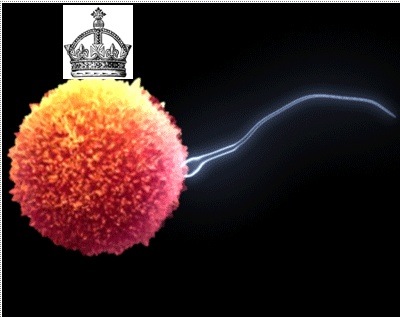
In honour of the newly announced maturation of the royal zygote into an air-breathing royal neonate — and its generous decision to head off a constitutional crisis by choosing to make do with only half its potential complement of X chromosomes — who is already predestined to rule over Britain, even while he is likely to be occupied less with affairs of state in the near future than with spitting up curdled royal milk from HRH the DoC’s royal mammary glands, I am reposting my proposal from two years ago, occasioned by the royal wedding. The proposal has been unaccountably ignored, despite its prospects for improving the democratic legitimacy of the monarchy. I can only infer that the neglect is due to a basic discomfort among the British elite with the innovations of modern science (unlike the innovations in, say, tax accounting, of which they tend to be avidly fond).

crowned_egg

With the impending union of male and female royalty breeders, there has been increasing tendency to cite Thomas Paine’s evergreen mockery:

The idea of hereditary legislators is as inconsistent as that of hereditary judges or hereditary juries; and as absurd as an hereditary mathematician, or an hereditary wise man; and as ridiculous as an hereditary poet-laureate.

(Paine never got to see the number of statistician children filling posts in some of today’s leading statistics departments, but the point is, in principle, well taken.) Seen as the monarchical version of an election — the keystone of the procedure by which a legitimate head of state is created — a Royal wedding certainly feels a trifle arbitrary. But this opposition to monarchy, though it wears the finery of modernity, has failed to keep up with advancing technology. True, it might formerly have been the case that the hereditary principle made the choice of head of state no different from a lottery (for which, see this suggestion). It seems impossible to unite the hereditary principle with the increasingly popular superstition that rulers should be selected by some non-random process, and that hoi polloi should have something to say about it. But now the following arrangements have been announced by the Palace (a particularly sodden corner of the palace wine cellar, to be precise)*:

  1. Following the wedding, a selection of at least 5 royal spermatozoa** will be extracted and fully sequenced by a specially selected team at the Royal Institution for Genetics Pedigree Studies. The secret method (which, in a nod to popular taste, does use beer as a reagent) has been designed to be maximally non-destructive.
  2. The sequences will published on the website princesperm.gov.uk. The public will have 5 days to register and vote for the one that they prefer be invited to form their new ruler.
  3. The elected sperm will be invited in the first instance to inseminate the royal egg. Should it fail in its attempt, the second-place sperm will be sent in. In the case of a repeat failure, a national referendum will be held to determine the correct voting procedure.

* It may be argued that this election proposal, being purely fictional and even farcical, has no bearing on the justification or not of the British monarchy. A dangerous argument indeed, for those who would dispense with fiction and farce would leave central pillars of the British constitutional order bereft of all foundation.

** Why are the future queen’s eggs not also sequenced? Choice of the ovum is a royal prerogative, cf.  Blackstone, Commentaries on the Laws of England, v. 5, section 113 (Oxford 1765-1769).

purim_royal_wedding

“Legal reasons”

The British press is legally somewhat more hemmed in than the US press, both by law (for instance, the and various arbitrary gag orders) and the threat of libel suits. (Fun fact: The truth defence against libel charges was eliminated in 1606 — at least as regards the sovereign, unpleasant claims are likely to be more damaging if they are true than if they are lies. An exception was made for “good motives” in 1792, but for the public interest in 1843. A more general substantial truth defence was reinstated last month.)

This leads us to this weekend’s blockbuster news. The Guardian has reported that the Mail on Sunday has reported

David Cameron has held crisis talks at Downing Street after being told of allegations of a sensational love affair which has potentially significant political implications for him.

For legal reasons, the Mail on Sunday cannot disclose the identities of the people involved or any details of the relationship – even its duration – other than that they are middle-aged figures. The affair has now concluded.

Hilarious! Like a Mad-Lib sketch for a political sex scandal. Details presumably to follow soon on Twitter.

Continue reading ““Legal reasons””

Total Impact: Wakefield edition

So it seems Andrew Wakefield is back in the news. As Phil Plait has described well, the man who has done more to undermine public health than any physician since Martini and Rodenwaldt has been given space in The Independent to accuse the British government of inadequate measles prevention. Because his rantings scared lots of parents off the MMR vaccine, and the NHS didn’t want to provide separate measles vaccines instead.

The pathological self-promoters you will have with you always, so there’s no real surprise there. But it got me to thinking about his future in British medical research. Because some denizens of less enlightened lands may not know how IMPACTFUL British research has become: The prime directive for state-sponsored research under the current government (though I think it started already under Labour) is “impact”, defined as

an effect on, change or benefit to the economy, society, culture, public policy or services, health, the environment or quality of life, beyond academia

because academia is just a province of Faerie, not an actual part of the society or economy. In addition to impact being a crucial part of every grant proposal, and the postmortem on every grant after it’s completed, this definition will guide 20% of the scoring on the Research Excellence Framework (REF) just now getting underway, replacing the Research Assessment Exercise (RAE) last conducted six years ago, because now instead of research being assessed, we agree that it’s all excellent but needs to be frameworked, or something.

So anyway, it’s noteworthy that BENEFIT is only one acceptable form of impact. Any change or effect gets you points for impact, rather in the way the bibliometric citation counting that prevails in many academic fields doesn’t distinguish between citations for your paper providing key insights that inspired follow-on research, and citations that point out yet another bone-headed mistake in the paper that has been confusing researchers and holding back the progress of the field.

What’s more, it’s not clear how anyone would evaluate whether those who benefit from the research are themselves providing a net benefit or harm to society. (Sorry, I mean, to the taxpayer. There’s no such thing as society.) Presumably no one will provide a support letter from bioterrorists, explaining how their headline-generating work would have been impossible without the groundbreaking research of Professor X, but someone like David Li could show evidence that his work formed the industry-wide basis for the multi-billion pound market in mortgage backed securities which (you may have heard) helped to crash the world economy. The fact that he might himself agree that his formula never should have been applied, that the bankers “misinterpreted and misused it“, and that “Very few people understand the essence of the model“, doesn’t detract from the benefit that derived to some people, at least in the short term, and even the worst recession in 75 years certainly counts as a “change in the economy”, demonstrating the IMPACT of the research.

With that in mind, I reveal the hitherto secret Wakefield Impact Case Study, titled “Royal Free Hospital School of Medicine characterisation of risk factors for Autism and Vaccination Policy”. We are confident that the massively impactful Wakefield will quickly be hired by a major research institution and showered with research grants. Continue reading “Total Impact: Wakefield edition”

More reflections on 9/11 and the Iraq war

I left out a few points that I wanted to make in my post on the 10th anniversary of the Iraq War:

  1. About a week after, I wrote in my diary that I had the disturbing impression, reading the comments of journalists, politicians, and intellectuals, that a significant subset of them were in a certain way pleased: not that the country was attacked, certainly not at the tremendous loss of life, but that life had turned serious. The country had been wallowing in nostalgia for the “Greatest Generation” — Tom Brokaw’s book had been published just a few years earlier — while the current youth (a group which I was just growing out of, being then aged 33) had its culture defined by ironic detachment. So we had articles on “The Age of Irony Comes to an End“. It was mainly just another way to bash young people, which is always popular, but it also appealed to a deep-seated desire to be the protagonists of history, solving problems of historic dimensions. And there are no victory parades for conserving energy and stopping runaway global warming. This was confirmed for me when people started quoting incessantly W H Auden’s 1939 disdain for the “clever hopes” expiring “of a low dishonest decade”. Continue reading “More reflections on 9/11 and the Iraq war”

Evidence, WMD, and the Iraq War: Reflections on Tony Blair and Colin Powell

With the 10th anniversary of the Iraq War, it’s an appropriate time to comment on two elements of the public discussion of the war, in the US and the UK, that puzzle me.

  1. The insistence, particularly among lefties who supported the war then and have reconsidered the matter since then, that everyone thought Saddam Hussein had active nuclear and chemical programs. At the time, I strongly opposed the war — because I thought it was an inappropriate distraction from Afghanistan, I didn’t like the way it was being ginned up, the WMD argument didn’t seem to me sufficiently important relative to the trouble it was likely to stir up –but I had every anticipation that the US military would march in and would find the missing nuclear program, and that this would be waved in the face of everyone who was still legitimately skeptical. I assumed there was a lot of secret information that more or less proved to anyone entitled to see it that this work was going on. It seemed more likely than not, until… Until Colin Powell’s speech to the UN. I found that speech astonishing. My thought was, surely they are pulling out all of the most convincing bits from their secret dossier, and that’s it? Continue reading “Evidence, WMD, and the Iraq War: Reflections on Tony Blair and Colin Powell”

Math anxiety turns political

In a recent interview, vice presidential candidate Paul Ryan was asked about the problem with his party’s proposed “budget” (if we may loosely use that word for a set of proposals that refrain from actually saying how much money will be raised, or how it will be spent), and suggesting that it would “take me too long to go through all the math”. He actually spent a couple of minutes avoiding wasting time by going through all the math. And in an interview the following day he further expatiated on his mathless mission of mercy: “I like Chris [Wallace, the interviewer]. I didn’t want to get into all of the math on this because everyone would start changing the channel.”

Sure, you may think you want to know how I’m going to be covering the pension and health care you think the government has promised you (“federal government legacy costs”, as his running mate might term them), but trust me, the answer involves MATH! MATH, I TELL YOU! Imagine Jack Nicholson at the end of A Few Good Men yelling, “You want the math? You can’t handle the math!” Paul Ryan is a selfless soul who has descended into the pit of reckoning, done battle for your sake with the math demons, and returned with a golden budget for all our sakes. Surely we cannot be so cruel (and so self-destructive) as to demand details of the horrors he encountered there. Maybe Obama has done okay protecting us from bin Laden and alQaeda, but only Paul Ryan is going to be able to save us from Euclid and alGebra. Continue reading “Math anxiety turns political”

Evasion and avoidance

Following up on my recent comments on piracy, recent news reports have forced me to learn the subtle difference between “tax evasion” and “tax avoidance”. Apparently “evasion” is when you don’t pay the taxes you’re required by law. “Avoidance” is when you don’t pay the taxes you’re required by law, but structure your property or income in such a way that you don’t pay (much) tax. It sounds like a pretty clear distinction, but the application can be dubious.

The Times recently reported on a widely used scheme that is so banal, so transparent, that one can hardly see it as representing anything other than a fig leaf to cover the authorities’ wish not to to tax the wealthy and powerful. The way it works is, extremely wealthy individual X doesn’t like his salary from company Y being taxed by government G, as though he were just an ordinary citizen. So he comes to an agreement with Y that they will stop paying him a salary, and instead pay an offshore shell company K2 for his services. So far so good. Y now pays no tax, because he has no income, but for obvious reasons this is not entirely satisfactory. Poor Y, who is now starving in a garret with no visible means of support, appeals to the good will of K2 (which has made such a great profit from Y’s tax aversion) for a loan. They’re a soft touch, and they loan him essentially all the money they’ve earned on his case, telling him, “Pay us back when you can.” He never pays it back, but they never lose hope. Loans are not taxable, of course, unless they are written off. Continue reading “Evasion and avoidance”