Genetics and Democracy in the United Kingdom

Solving the democracy deficit through modern science
 

crowned_egg

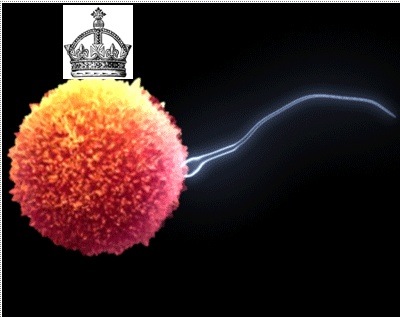
With the impending union of male and female royalty breeders, there has been increasing tendency to cite Thomas Paine’s evergreen mockery: “the idea of hereditary legislators is as inconsistent as that of hereditary judges or hereditary juries; and as absurd as an hereditary mathematician, or an hereditary wise man; and as ridiculous as an hereditary poet-laureate.” (Paine never got to see the number of mathematician children filling the posts in most of today’s leading mathematics departments, but the point is well taken.) Seen as the monarchical version of an election — the keystone of the procedure by which a legitimate head of state is created — a Royal wedding certainly feels a trifle arbitrary. But this opposition to monarchy, though it wears the finery of modernity, has failed to keep up with advancing technology. True, it might formerly have been the case that the hereditary principle made the choice of head of state no different from a lottery (for which, see this suggestion). It seems impossible to unite the hereditary principle with the increasingly popular beliefs that rulers should be selected by some non-random process, and that hoi polloi should have something to say about it. But now the following arrangements have been announced by the Palace (a particularly sodden corner of the palace wine cellar, to be precise)*:

  1. Following the wedding, a selection of at least 5 royal spermatozoa** will be extracted and fully sequenced by a specially selected team at the Royal Institution for Genetics Pedigree Studies. The secret method (which, in a nod to popular taste, does use beer as a reagent) has been designed to be maximally non-destructive.
  2. The sequences will published on the website princesperm.gov.uk. The public will have 5 days to register and vote for the one that they prefer be invited to form their new ruler.
  3. The elected sperm will invited in the first instance to inseminate the royal egg. Should it fail in its attempt, the second-place sperm will be sent in. In the case of a repeat failure, a national referendum will be held to determine the correct voting procedure.

* It may be argued that this election proposal, being purely fictional and even farcical, has no bearing on the justification or not of the British monarchy. A dangerous argument indeed, for those who would dispense with fiction and farce would leave central pillars of the British constitutional order bereft of all foundation.

** Why are the future queen’s eggs not also sequenced? Choice of the ovum is a royal prerogative, cf.  Blackstone, Commentaries on the Laws of England, v. 5, section 113 (Oxford 1765-1769).

purim_royal_wedding

New Year Austerity Plan

A Press Release from the Ministry for Calendars, Clocks, and the Underclass

Deputy minister for Temporal Affairs Nigel Thwart (Lib-Dem) is releasing today guidelines for the coalition’s plan to save £120 billion by cancelling the new year. ‘We found that 1983 was still in excellent condition. Military chronologists have refurbished the year and put it into place to be serving us again starting shortly after 23:59 GMT on 31/12/2010. The year has functioned flawlessly in intensive testing, and we are confident that it will meet all the nation’s chronological needs through December, if not longer. We do recommend early bedtimes, though, to avoid overstressing the slightly threadbare post-midnight hours.”We reject claims of some malcontents that the Liberal Democrats have violated the pledge famously signed in blood* by Nick Clegg and other party leaders to “move the country into the future”. This is a coalition government, and we cannot expect to govern as we would like to had we a majority. We are most proud of our party’s influence to moderate the initial Conservative Party plan to return to 1940, which is currently owned by the Smithsonian Institute in Washington. While this year would have been substantially cheaper, the Liberal Democrats maintain that such a regressive move would blatantly contradict our election manifesto pledge.’The year will be sold to a consortium of private investors, and leased back by the Crown, leaving the taxpayers with substantial savings.’We are confident that it will still be possible to modify the year to introduce a referendum on election reform.’
* Mr Clegg’s spokescaitiff has emphasised that it was not the Deputy Prime Minister’s own blood on the signature.

(by DS and JB)

Obesity and education standards

Applying lessons from education reform to win the fight agains obesity

2006rate

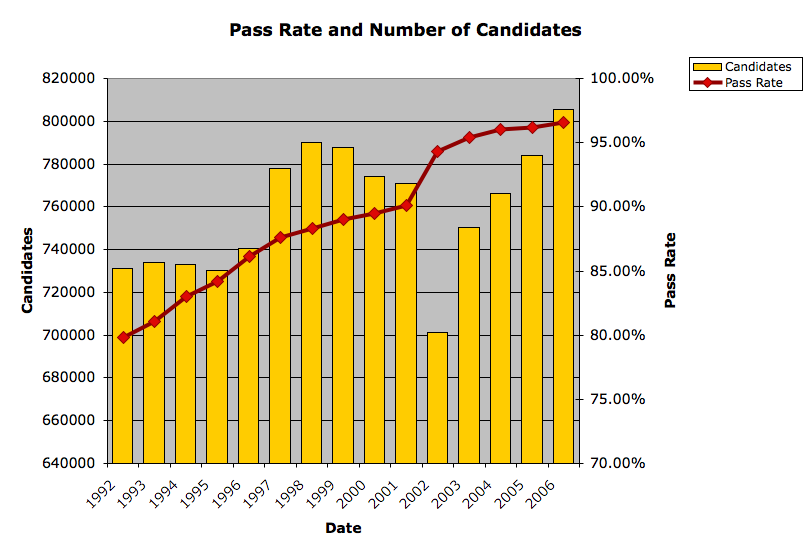
recent article in the British Medical Journal reports that obesity costs the UK £2 billion in direct and indirect costs. 22% of the British population is thought to be obese, defined as a body mass index (BMI) of 30 or higher; some experts predict that this cost could rise to £45 billion by 2050. The problem of rising obesity, with its multifarious costs, has been described as intractable. These defeatist sentiments ignore the lessons of some of the great successes of social policy, and how seemingly intractable problems can melt away, when attacked with the right combination of zeal and creative new thinking. Consider the progress in state education over the past two decades, and particularly in the 13 years of the Labour government, after Tony Blair announced his three top priorities in the election campaign to be “education, education, education”.

Back in the 1980s, doomsayers were lamenting a collapse in UK secondary education, with the dissolution of the grammar schools. Today, A-level marks are the highest they have ever been, which must surely reflect a huge increase in British school children’s educational attainment. Education experts have expressed amazement at the educational progress over just the decade from 1997 to 2006: In 1997 only 87.2% of A-level (age 18) marks were passes, while by 2006 that had risen to a stunning 97.2%. The fraction of A grades (the highest possible) rose from 16% to 24%. Similar progress was recorded in the GCSE performance (age 16). The percentage of state school applicants admitted to Oxford rose in that time from less than half to 55%, which can only mean that these pupils are learning more, compared with their counterparts at expensive independent schools.

The key insight came from the Prime Minister’s Office for Post-Structuralist Policy Initiatives (PMOP-SPI, pronounced mop spy, the first P being silent), which recognised, in the words of director Pauline deVrouw, “Standards were created for man, not man for the standards. Therefore the Commons is lord over the standards.” This has been extended in the brilliant new Department of Health white paper “Health consequences of the  standard kilogram”. “Obesity,” states the white paper’s forthright preamble, “has many causes, but ultimately it is a matter of centimetres and kilograms. The standard kilogram, although it was manufactured in London, is now kept in a vault in Paris, indifferent to the particular British mensuration needs.” The paper goes on to explain how just a 10% increase in the size of the kilogram  — easily achievable with current technology, and barely even noticeable to the casual observer — would produce a 9% reduction in BMI, and thus reduce the number of obese Britons and the attendant costs by more than half. This approach is found to be vastly cheaper than the next most cost effective plan for reducing obesity, a complicated scheme which involves citizens exercising more and eating less junk. (What costs do accrue — mainly new scales — would be borne by the private sector, and would, in the present economic climate, be useful as an economic stimulus.)

For all that the French call their jealously guarded kilogram “Le Grand K“, the fact is that the kilogram is underweight. Not only has it failed to keep pace with the increasing demands that our population puts on the scale, it has apparently been shrinking even in absolute terms. According to one estimate, the French have managed to misplace 0.005% of Le Grand K (50 micrograms) in its first century. That may not sound like much, but a 0.005% reduction in the size of a kilogram leads inexorably to a 0.005% increase in BMI for the entire population. From this we may infer that there are about 3000 British adults who are currently obese, who would not be obese had the kilogram not diminished.*

Just as Britain’s leaders had the wisdom to withdraw from its fixed exchange rates in the 1990s, and to avoid the unworkable European monetary union, so we need politicians intrepid enough to withdraw from our archaic pessantory union with France. Like the European Central Bank, maintaining its hard-money policies which suit powerhouse Germany and impoverish weaker economies like Ireland and Greece, the myopic French small-kilogram policy, while perhaps acceptable to gallic lightweights, is having unacceptable consequences on this side of the Channel. How could we expect the same kilogram to suit a nation of snail-peckers and a nation of haggis-and-roast-beef-chompers? We are still calculating BMI with a kilogram that was milled in the era of top hats and whale-bone corsets. It’s time to repatriate the kilogram, and take control of the Britain’s weight problem, just as we have set British education on its unstoppable upward trajectory.

* These are the individuals with BMI currently between 30.000 and 30.0015.

johnson_matthey_kilos

What’s a queen for?

One really peculiar thing that immigrants from republican lands need to adjust to in the UK, is that they actually take this monarch thing seriously. Not in the sense that people regularly drink toasts to the Queen, or speculate about fine points of the order of succession, but that people genuinely think it a reasonable constitution order that the head of state should be selected on the basis that her father held a similar position many decades ago, and that her son (and grandson) should be presumed to take on the job after her demise. Having always lived in republics (except for a brief stint in the Netherlands) kings and queens seemed to me figures from fairy tales and history. I knew that there are people called kings and queens existing in the modern world, but that always seemed an unreal and somewhat ridiculous anachronism, like the toga party in Animal House, or hobby jousters. But when the most recent elections descended into chaos, the experts were clear that it would be the Queen’s prerogative (after consultation with her advisors) to decide which politician should be “invited” to form a government. Again and again the Prince of Wales makes scandals by interfering in London city planning, among other functions of government. They fuss and fume about the prince overstepping his constitutional bounds, but no one would think of telling the prince to just go fuck himself, and treat his “black spider letters” with the same consideration they would give to the letters of any citizen — is he even a citizen?

Which leads to my proposal, which I hope will be taken seriously, given the depth of the current financial crisis in Britain: A lottery for the right to be the next monarch. I suspect that very many people would be willing to stump up a few pounds for a shot, and quite a few might pay several millions for a really substantial chance. The winner of the lottery has exactly the same chance of having the personal qualities required of the head of state as the monarch selected by the genetic lottery currently in force. We might have to eliminate certain requirements of the job, like weekly meetings with the prime minister, to make it more attractive. They could keep the post until death, and then it would revert to the state for a future lottery.

Now, this may seem like a huge constitutional change, but when I read about the British Constitution, the only argument that ever seems to be presented for the hereditary principle is that it saves the British the nuisance of having to vote for their head of state, or of having some washed up old politician appointed head of state by his old confederates. I think it should be clear that my scheme also avoids these problems, as well as complying with all EU directives.

I’m sure the professionals can work out some good advertising slogans (“Paris is worth a mass, but London is worth a pound”; “The new Magna Carta” — stamped on a mock-up lottery ticket; “It’s never too late to have a royal birth”?)maybe a jingle or two, and a legal and constitutional framework.

All British institutions have submitted to the exigencies of finance, except the monarchy. It’s about time the Queen gets with the program and moves to the City.