Sikh and ye shall find

… a primary school place.

Apparently the government’s decision to wipe out new school construction and put huge amounts of the remaining schools budget into independently run “free schools” has led to some unexpected consequences:

More than 20 pupils have been allocated places at a Sikh-ethos free school in Leeds that they did not choose, amid a shortage of school places.

The school is not a faith school, but it is run with a Sikh ethos.

As someone with a child who had little option but to attend a Church of England school, that really was a “faith school” — secular options were much further away, even if they did have places — I wonder what the fuss was about.

On its website, the Khalsa Free School stresses it is not a faith school, adding: “We are firmly committed to developing our pupils’ understanding and appreciation of the diverse world in which they live.” It says: “We welcome all children regardless of their backgrounds or faiths and we aim to help all our children develop a lifelong love of learning, which will support them throughout their academic careers and beyond.” 
“For Sikhs, education not only prepares students for work and life in society but also supports spiritual growth. Education is understood by Sikhs to raise aspirations and personal standards, encourage self-awareness and humility, and inspire all to seek a greater purpose in life.”

Humility! Purpose! No wonder parents are outraged. What impact will self-awareness have on lifetime earnings? How will humility help them get in to Cambridge? Where is the acknowledgement of the divine imperative to maximise test scores?


14th Century NIMBYism

In Juliet Barker’s book on the Great Revolt of 1381 I was struck by this comment on the spread of local grammar schools in England in the second half of the 14th century:

Where there was no dedicated room or building available, classes were held in the local church. In 1373 the Bishop of Norwich prohibited this practice in the schools of King’s Lynn, on the grounds that the cries of beaten children interrupted services and distracted worshippers.

Nowadays the bishop and the local residents would have cited the shortage of parking… Continue reading “14th Century NIMBYism”

The next war

The BBC reports that education secretary Nicky Morgan “wants England to be in the top five in the world for English and maths by 2020. It is currently 23rd.” They quote her:

Returning us to our rightful place will be a symbol of our success. To achieve this, we will launch a war on illiteracy and innumeracy.

So, I’m thinking about wars that Britain has prosecuted over the past half century or so, often with the goal of “returning us to our rightful place”. Suez. Falkland Islands. Bosnia. Iraq. Yemen. Cyprus. Kenya. Afghanistan. Northern Ireland. Not all disasters, but not an unbroken record of glory either. Not really a set of memories you want to activate if you want your audience to think “overwhelming success” rather than, say “useless drain on national resources”, “antiquated racist ideology”, or “undermining democracy and human rights”.

Putting aside the absurd-sounding ambition for England to be among the top 5 for English, (I’ll just guess this wording reflects the slightly vague British awareness that foreigners tend to speak Foreignish, and so might have literacy skills to be tested that aren’t literally “English”) the battle plan for maths all comes down to tables:
Continue reading “The next war”

Examination socialism

I was talking with someone recently about the bizarre British practice of allowing the A-level exams to be set by competing exam boards. It’s bizarre because of the well-known agency problems in examinations: The customers are the schools, whose interest is in high marks, not in effective exams. So we get government ministers persistently fulminating against watering-down of exams.

This is typically presented as a capitalist approach, reflecting the British enthusiasm for market-based solutions instead of big government. In fact, while this solution has the trappings of capitalism, it suffers all the theoretical and practical defects of socialism. As I understand it, those who theorise the superiority of capitalism tend to focus on the diffusion of decision-making to the periphery, where the expertise resides, and the virtues of aligning incentives with goals, which is far more efficient than central planning. Then comes the bracing effect of competition to achieve those goals.

In this case, the natural incentives of those looking to make a profit by selling their product to schools are clearly misaligned. Yes, they can fruitfully compete on accuracy and speed of marking, but the essential content and rigour of the exams is a race to the bottom. (This might not be the case if they were providing distinct qualifications, that might be competing for influence with universities. There is the competing International Baccalaureate, adding an extra level of complexity, but the multiple exam boards are supposed to be producing evaluations of the same qualification, the A-levels. We have a similar problem with university degrees, where there seems to be a pious fiction that “first-class degree” is an absolute standard, whether from Imperial or London Metropolitan; but this is clearly not taken very seriously.) The bottom is set by elaborate government regulations — central planning — and all the competitive ingenuity goes into formally hitting those standards while maximising the marks. (I don’t know if this is really true; but that is what you would predict, theoretically, and it would explain the downward spiral of A-levels.)

It’s a good thing they didn’t stop at 12…

The BBC reports today on the most recent THE global university rankings. The article is illustrated with a grinning, texting stock-photo student (I’m genuinely baffled as to what value these atmospheric photos are thought to add to news article) above the caption

The rankings rate universities worldwide on 13 measures, including teaching.

Wow! These rankings of higher education institutions were pretty thorough, if they even went so far as to include the quality of TEACHING among their 13 factors! If they’d had sufficient bandwidth for 14 factors they might have ranked them on the quality of their wine collections. Then Oxford would have come out tops for sure.

Devices like this one are sometimes still used to watch the BBC!

Innumeracy: UK prison service edition

The BBC reports on a study by the Prisoners Education Trust, of the impact of the recent decision of the prison service to limit prisoners’ access to books. The Ministry of Justice has dismissed the study, saying

the PET survey of 343 inmates represented just 0.01% of the total prison population in England and Wales.

This is a twofer, with a pair of errors packed into impressively small space. Even a government minister should be able to calculate that if 343 inmates represent 0.01% of the prison population, then more than 6% of the population (53.5 million) must be imprisoned, which I don’t need to check the figures to know must be wrong. But I did check it, and find that the Ministry of Justice made a wee error of not quite 2 orders of magnitude. According to this publication (coincidentally, also from the Ministry of Justice) there were about 84,000 prisoners in June 2013. Assuming there haven’t been any huge changes since then, those 343 inmates in fact represent 0.4% of the prison population. Where is Michael Gove when you need him?

More generally, the comment conveyed the impression that if the sample were a small fraction of the population then it couldn’t be statistically valid. Of course, that’s not true. If you were doing an election poll of the whole population of England, a random sample of 0.01% of the population would be about 5000 people, which is much larger than most surveys, and enough to get a result that’s accurate to within about ± 1.5%. The real problem with this survey is that it’s not a random sample, and not representative, being self-selected among readers of a certain magazine; but there is no pretence about that, and if the Ministry of Justice were interested in addressing the issue rather than issuing talking points, they could address the question of whether the concerns raised by the more literate of the prisoner population most concerned with literacy are worth taking seriously.


Low unemployment rates for math/stat PhDs

I was interested to read of a recent NSF study, that found only 2.1% unemployment in the US for people with doctoral degrees in science, engineering, and health fields. That’s only about 1/3 the rate in the general population over age 25. But I found even more striking that within that group, those with doctorates in mathematics and statistics had lower unemployment than those in any other field, at 1.2%.

Metric overlap

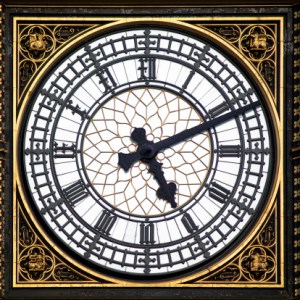
big ben faceI was just reading this article about the failure of the US to convert to the metric system in the 1970s — a review of the book Whatever Happened to the Metric System? by John Bemelmans Marciano. (About whose title I wonder, whatever happened to the phrase “what ever”? Isn’t “whatever” a completely different word? Whatever.)

It reminded me of my school days, when the units unit — the unit on converting between English and SI units — was a regular feature of every year’s math lessons. We were told that this would be important for the future, since everything was going to be converted to metric. Something to justify a lifetime of skepticism toward those

At the time, I thought it strange that so much time was being spent on converting between the old and the new units. Once you start using new units, you rarely need to convert to the old ones; and most of the conversion can be done with double-marked measuring utensils, like the measuring tapes that were then and still are ubiquitous. (I was fascinated when I first saw the 18th century clock faces that have the hours subdivided simultaneously into fours and into fives, the latter to accommodate the new-fangled minute hands, the former for the old one-handed system, where a single hand showed the time on a 12-hour or 24-hour scale (or 10-hour, if it was late 18th century Paris), with each hour subdivided into quarter hours. An example, from a much later date (mid-19th century, pictured above) is the face of Big Ben in London.

Emphasising conversions made it seem like metric requires hard math, as well as remembering things like 3.28 feet in a metre, or 454 grams in a pound, whereas it actually means you can stop remembering things like 5280 feet in a mile, or 4840 square feet in an acre, or 4 pecks in a bushel. But I remember being particularly struck at the time (the time being about 1980) by an argument I read, claiming that metric conversion would impose untold costs on the US economy, requiring the replacement of everything from shot glasses to wrenches. I found this claim very odd. Surely, I thought, the fact that we measure the size of drinks in millilitres rather than ounces doesn’t forbid us from making a drink have an odd number of millilitres, at least until the old glasses break.

It reminds me of when Deutsche Telekom, in the pre-competition days, proposed changing the basic unit of charging for local calls from three minutes to half a minute, or maybe it was even less. I remember listening to a call-in show on the radio where this was being discussed, and an elderly woman called to express her outrage. “Who would make a half-minute call? What can you discuss in so little time?”

Anyway, metric didn’t happen in the US, except for the 2-litre pop bottles, and gram bags of cocaine. But even where it did happen there remains an overlap of older units. In Britain, which has been metricated by law since EEC accession in the 1970s, house sizes are in square metres, petrol sold by the litre, and fruits are priced in pence per kilo, but beer is sold by the pint and distances between cities are generally measured in miles. People’s weights seem to be given equally in pounds, kilos, or stones (14 pounds). Commonly imperial units are given as alternatives to officially required metric units, suggesting that at least some portion of the public has a better intuitive grasp of the imperial units. But even in Germany, which had the metric system imposed by Napoleon more than 2 centuries ago, people still talk of “Ein Pfund Butter”, even if this “pound” of butter is a metricated pound, rounded to 500 grams.

Early 20th century MOOCs

It is always enlightening to see how some of the same breathless optimism derived from our newest innovations, the claims that perennial problems are going to be solved at last, were also derived from innovations a century or more old, when they were new. In particular, I was struck by Kevin Birmingham’s account (in his remarkable book on the genesis of James Joyce’s Ulysses) of the early days of Random House, and its Modern Library series:

Both within and beyond universities, people began thinking that certain books illuminated eternal features of the human condition. They didn’t demand expertise — one didn’t need to speak classical Greek or read all of Plato to benefit from The Republic — all they demanded was, as [Professor John] Erskine put it, “a comfortable chair and a good light.” […]

The Modern Library offered commodified prestige with the illusion of self-reliance. Readers could have the benefits of institutional culture without the institutions. They could rise above the masses by purchasing a dozen inexpensive books.

Replace “good light” by “fast internet connection”, and you have the promise of Coursera. Of course, that jibes well with the feelings that many skeptics have, who wonder why we need new technology to democratise education. As long as you’re lecturing to masses, where personal feedback is logistically impossible, doesn’t it suffice to have a well-stocked library?

Poor parents

Fining parents is the latest fashion in UK education policy. The government has this started fining — and threatening with criminal prosecution — parents who take their children out of school, other than for illness, for any reason short of a funeral. Education Secretary Michael Gove has recently announced his intention to impose fines on parents if their children misbehave in school.

Now we have the UK chief inspector of schools, Sir Michael Wilshaw, wanting to go beyond the school walls, suggesting fines for parents who don’t read to their children enough (or, presumably, the right books full of “British values“). In an interview reported on the front page of today’s Times he said

It’s up to head teachers to say quite clearly, “You’re a poor parent”… I think head teachers should have the power to fine them. It’s sending the message that you are responsible for your children no matter how poor you are.

To be fair, the context makes clear that the first use of the word poor is meant to be metaphorical, but I think there’s no denying that the word choice there simply reveals more than is intended. The government’s attitude is that families with children in state schools must be indifferent to education, because if they weren’t, they would have sent their children to private schools, wouldn’t they?

If you’re poor and a parent, you must certainly be a poor parent, and you need to be chivied into allowing your children to be trained to the appropriate mediocre level that will spare the City drones of the future from ever having to do an honest day’s work. If you think that education is a collaborative project between families and schools, and that children need to be engaged rather than bullied, you’re just making “an excuse for not teaching poor children how to add up.”

In other words, if we don’t make schools like prisons now, those children will end up in real prisons later on.

What is unclear to me is whether this reflects reflexive  an intentional policy to drive families who could afford private education out of the state sector, whether purely in the interest of cutting costs or to curtail social mixing.