Tevye in the City

I recently read Sholem Aleichem’s Tevye stories (inspired by the wonderful book by Alisa Solomon, Wonder of Wonders: A cultural history of Fiddler on the Roof — they’re available now free from the Yiddish Book Center), and I was startled by several features. Tevye is a much more forward-looking figure than he appears in Fiddler on the Roof, which chose to emphasise the cultural divide between him and his daughters.

One thing that really caught my attention was that Tevye, before he got to marrying off his daughters, the travails of which are the basis for Fiddler on the Roof, lost all his savings in some vague financial schemes. The description is priceless, how his distant cousin Menachem Mendel

let me understand how he makes three rubles out of one, and from three — ten. First of all, he said, you invest a hundred rubles and then you order ten somethings — I’ve already forgotten what they’re called — to be bought for you; then you wait a few days until its price goes up. Then you send off a telegram somewhere with an order to sell, and with the money, to buy twice as much; then the price goes up again and you dispatch another telegram; this goes on until the hundred becomes two hundred, the two hundred — four hundred — eight, the eight — sixteen hundred, real “miracles and wonders”! There are people, he said, in Yehupetz, who just recently walked around barefoot, they were brokers, messengers, servants, today they live in their own brick houses, their wives complain of stomach ailments and go abroad for treatment. (Trans. Joseph Simon)

(Much of the imagery of the song “If I were a Rich Man” comes from this story.) As ever, finance was an extractive industry, fuelled by a steady stream of gullibility and greed, in varying proportions.

Anyway, this all reminded me, obliquely, that Tevye had an exact contemporary, who has recently been experiencing some great success on the small screen, having been updated and moved into modern London, namely Sherlock Holmes. I don’t mean to draw any comparison between the figures, but it seems to me that Tevye might do equally well in modern London. (Mad magazine moved him into the American suburbs in the 1970s, which was an obvious idea, but in some ways more foreign.) I could see him drudging away in a small hedge fund, trying to do the right thing, never getting to see his family, suffering with computer breakdowns, losing money through honest dealing, accepting the ups and downs of London real estate with his idiosyncratic proverbs, like

All life ends in death. We’ll all be dead some day, Golda. A man is like a carpenter: a carpenter lives and lives and dies, and a man lives and dies.

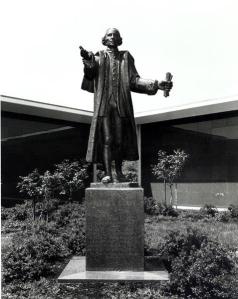
King Camerute, holding back the waves

“Prime minister seeks to assert his authority over natural disaster”

Canute: “But it’s not a blank cheque…”

This was a sub-headline in The Guardian. He has pledged unlimited funds to the flood control effort:

My message to the country today is this. Money is no object in this relief effort, whatever money is needed for it will be spent. We will take whatever steps are necessary

However, before he can control the storms, the PM needs to assert his authority over his cabinet, since today the transport secretary said “I don’t think it’s a blank cheque.”

Of course not. Philosopher King Camerute was simply asserting the Buberian I-Thou relationship of the government to money. Money is not an object, it is a subject, and we must respect its concerns. The people whose homes are under water may feel that certain steps are necessary, but the money may have different feelings, and not wish to be instrumentalised in that way.

Math and taxes

Oxford University has a new mathematics building. It’s very nice, looks like it would be a good place to work. But I found it fascinating to learn that the building is split in half, one part for teaching, one for research, with undergraduates basically forbidden to enter the research part. It’s a bit of a nuisance for the faculty, who need to give tutorials, and would sometimes find it convenient to do it in their Maths Institute office rather than in their college. Why is it? The story — I can’t vouch for its truth, but I’ve heard this from several people — is that it is for tax reasons. Apparently, research is considered a charitable activity, while teaching is… I don’t know, commercial activity? By splitting the building this way, they were spared paying VAT (close to 20%) on the construction.

This suggests an updated version of an old Jewish joke:

(Student tries to enter the research side of the Maths Institute Building.)

Receptionist: Where do you think you’re going? You’re not allowed in there.

Student: I’m looking for my brother. He’s a graduate student here.

Receptionist: Why don’t you ring him?

Student: He’s probably in one of the interaction zones, which have been designed to facilitate informal discussion outside the framework of traditional office spaces.

Receptionist: You could ring his mobile.

Student: As you are probably aware, the lovely metal cladding on the interior walls has exactly the right dimensions to block all mobile telephone and computer wireless radio signals. (True, apparently.) Please, I just need to go in for two minutes.

Receptionist: Well, okay. But don’t let me catch you learning in there!

Adversaries “rubbing hands with glee”

… can’t they use moisturiser like everyone else? I’m sure I’ve seen this movie:

Sir John Sawers, head of MI6, said: “The leaks from Snowden have been very damaging… It is clear our adversaries are rubbing their hands with glee.”

In other reports, enemies of Britain are said by security experts to be “cackling maniacally”. And intelligence sources have reported that leading terrorist operatives have been heard gloating over our failure to stop their brilliantly contrived schemes for world domination.

“Give me the appearance of liberty or give me death…”

Patrick Henry

… if David Cameron were Patrick Henry, that would have been his impassioned cry.

Here’s what he did say to parliament:

We have a free press, it’s very important the press feels it is not pre-censored from what it writes and all the rest of it.

I don’t want to have to use injunctions or D notices or the other tougher measures. I think it’s much better to appeal to newspapers’ sense of social responsibility. But if they don’t demonstrate some social responsibility it would be very difficult for government to stand back and not to act.

We would like the press to feel it is not pre-censored. But they must be in fact pre-censored, otherwise the government will have to resort to “the other measures”. But not to worry. The only people who might be subject to these other measures are in thrall to ‘a “lah-di-dah, airy-fairy view” (that was really Cameron’s expression) about the dangers of leaks.

Why am I not reassured in this government’s willingness to carefully weigh the different interests in the secrecy debate? Nothing speaks “careful analysis” like presenting your opponents’ view as”lah-di-dah, airy-fairy”.

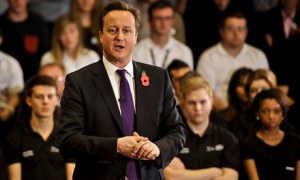
Cameron tours the Mini car plant in Oxford.

Vintage paranoia

The NYTimes has just published one of its brilliant series of debates, this time on the question of whether it is appropriate to spy on allies. The writers line up more or less two for, two against. Within the for camp there is a split between the world-weary cynical academic Rhodri Jeffreys-Jones, and Bush-era senior Homeland Security official Stewart Baker’s raving paranoia. His headline is “Allies aren’t always friends”, but what he really means is, there are no friends, only enemies we’re not at war with yet. The world is divided up into current enemies and future enemies. He writes

Even the countries we usually see as friends sometimes take actions that quite deliberately harm the United States and its interests. Ten years ago, when the U.S. went to war with Iraq, France and Germany were not our allies. They were not even neutral. They actively worked with Russia and China to thwart the U.S. military’s mission. Could they act against U.S. interests again in the future – in trade or climate change negotiations, in Syria, Libya or Iran?

This is, to put it briefly, insane. It’s like saying, “You’re not my friend. You actively worked to take away my car keys and thwart my plan to drive home from the party yesterday,” after you managed to get the keys back and then ran the car into a tree. Anyone who followed the discussion in France in Germany at the time of the Iraq war would have to acknowledge that “harming the United States and its interests” was nowhere part of the justification for opposing the war. It wasn’t even a matter of seeing the US and Europe as having opposing interests that demand a compromise, that of course can happen between friends. The general belief was that the US and Europe had one common interest, and the US was screwing it up with its obsession with the “military mission”.

Now, the public debate may have been a charade. Perhaps Mr Baker has seen NSA-procured films of clandestine meetings between Schröder and Chirac, with Chirac twirling the thin moustache that he had specially attached by state cosmeticians for such meetings, and saying, “Of course, you are right, cher Ger’art, my plan to deploy the Force de Frappe to obliterate Washington and that freedom-loving Bush and the ‘orrible MacDo, lacks sufficient, how you say, finesse. Far better to allow our good friend Saddam ‘ussein do our dirty work.” And then they pinned the European Star, first class, to Osama bin Laden’s robe, and apologised that his great service could not yet be publicly acknowledged, but that he would be shining beacon to enemies of freedom down through the ages.

It’s a shame that they can’t publish that. Everyone would understand then why spying on our not-yet-enemies is so important. Until then, our spies will have to remain sadly misunderstood.

New lows in modern copy-editing

NYTimes screenshot 24-10-13, 10:53 amThe NY Times has, right at the top of its current web site, misspelled the name of Germany’s Chancellor Angela Merkel. I’m inclined to say that this is not the sort of fast-breaking news where the requirement of speed overrides the demands of careful copy-editing.

For clarification, the figure on the right is not Merkel. I’m not even sure he’s German.

Public relations advice for GCHQ (from Wolf Biermann)

If you don’t speak German you probably have never heard of Wolf Biermann, who many people (I am one of them) would consider to be the greatest, or at least one of the greatest, political songwriters of the 20th century. Unfortunately, text-heavy songwriting doesn’t cross borders well, so he is almost unknown outside the German-speaking world. But he is an extraordinary poet and musician, and I’m not sure who could compare to his blend of wit, righteous anger and political sophistication.

At the moment, I’m particularly thinking of his 1974 Stasi Ballade, a sarcastic paean to the internal security service (Staatssicherheit, or Stasi) that had kept him constantly under surveillance since the early 1960s, when his communist idealism had been pegged as politically deviant. I’ve included the whole German text below (certainly a copyright sin, but perhaps a venial one). A crude translation of parts of it give a sense of Biermann’s text:

I feel myself somehow entwined
with the poignant Stasi swine
who watch my house, who come and go
in pouring rain and sleet and snow.
Who installed a microphone
to listen in on all my moaning,
songs and jokes and mild bitching
on the toilet, in the kitchen:
Brothers from Security —
You alone know all my grief!

…..

Words that would have disappeared
are stored by you on eight-inch reels,
and I know how, now and then,
you sing my songs at night in bed!
For years I’ve been depending on
the Stasi as my Eckermann.

When I come home late at night
from the pub tired, maybe tight,
And some crude peasants were to lurk
in the darkness by my door,
and they attacked most vulgarly
to do, I don’t know what, to me –
But that’s impossible today.
The comrades in their battle grey
from the Stasi would — I’d bet you! —
Prohibit an assault or battery

Because the papers in the West
Would try to blame the crime — I’d bet you! —
on the Communists …
The Stasi is — I must regard it
as my loyal bodyguard!

Or we could reflect a while
upon my foolish carnal freestyle –
My habit, such a source of strife,
that always discomposed my wife –
This monstrous, mad, and reckless tempt-lure
pulling me toward new adventure.
Since I know how Argus-eyed
the comrades watch, I haven’t tried
to pick my cherries anymore
from the trees on other shores.

I know I’d risk that such events
would be recorded, and soon be sent
to my wife with clear intent –
Such a huge embarrassment!
And so I skip these sideways swerves
so save my strength, my time, my nerves –
And there’s no question that this spark
I save redounds to fire my work!
I say, in short: the Security
Secures my immortality!

So, let’s summarise: Biermann thanks the Stasi surveillance for three services:

  1. Recording his words. Assuring that they will never be forgotten, and that someone is paying attention. Of course, it’s not clear how much attention GCHQ is allowed to pay, according to current law, but they could do a lot more to win over the hearts and minds of the public on the other score. Imagine GCHQ Backup. Never lose another file. If you have a disagreement about what was said in a telephone conversation, just use the webform to contact GCHQ’s round-the-clock service representatives, who will be happy to provide you with the recording. Maybe they’ll even get people to agree to leave their webcams on at all times, in return for cataloguing and backing up their non-telephonic conversations.
  2. Protection from crime. They’ve emphasised this so far. I’m not sure that there is more to be gotten plausibly, at current funding levels.
  3. Preserving morals. This one is delicate, but may have the greatest potential for development. Of course, it’s implicit in the argument that people make, that those who have not committed crimes have nothing to fear from surveillance. We know that the NSA has already been experimenting with the use of electronic surveillance to control sexual deviance. They could offer a service that automatically mails to your partner the content of any conversations that include certain keywords. The application is not limited to sexual morals, of course. Employers could be alerted when their employees discuss company secrets (or theft of company property). Or maybe you’re a Muslim youth who is worried that you might be tempted into islamist terrorism. The problem is, some people don’t want to be prevented from having affairs, or consorting with islamists, or whatnot. This part still needs work.

Continue reading “Public relations advice for GCHQ (from Wolf Biermann)”

Starving children for progress

Apparently the US Fox News network has recently advocated withholding free lunches from poor schoolchildren, as an effective means of teaching their parents the lesson that being poor is a bad life-choice, and they should have chosen to be rich instead. (It should be noted that this represents an upgrading of American right-wing attitudes toward nutritional support for the poor, who were previously compared by leading politicians to dangerous ravening beasts.)

I’m surprised they didn’t cite the wealth of studies from the UK, showing that children receiving free school meals went on to have significantly worse GCSE (age 16 qualification) marks — suggesting that free school meals impede learning of lessons by the children as well as their parents — and had higher rates of obesity (suggesting that Fox News correctly judged that lunch is superfluous for these children). English as a Second Language and Special Education teaching, as well as foster care, appear to have similarly detrimental effects, suggesting that eliminating these supports will yield major improvements to children’s health and educational success.

(For details of the statistical methodology, see here.)

Information, which terrorists could use

If there are any terrorists reading this blog, I have to make a formal demand that you not read this post. Really. Terrorists must stop reading here. (You know who you are.)

According to an article in The Guardian

Following a ruling by Lord Justice Laws and Mr Justice Kenneth Parker, the police will now investigate whether possession of the seized material constitutes a crime under the Terrorism Act 2000, which prohibits possessing information that might be useful to terrorists and specifically “eliciting, publishing or communicating” information about members of the armed forces, intelligence agencies and police which terrorists could use.

That’s quite a broad mandate, and I think many people should be worried.

For instance, I happen to be in possession of information suggesting that the UK intelligence agencies and police and armed forces are led by incompetent politicians who have lost control of their own parties and are losing the support of the public, and who could themselves wind up in prison if the laws were fairly applied. It is easy to see how this information could be of use to terrorists if they knew. And now I have gone and published the information on this blog. (They may already know, but that is no defence under the law, so far as I can tell.)

If it comes to trial, I plan to argue that I couldn’t possibly have anticipated that terrorists would violate the terms of service of this blog by reading past the first line.