Can Russia stab us in the back?

Who knew that things had gotten so intimate between the erstwhile Cold War adversaries? Senator Charles Schumer (of New York) says

Russia has stabbed us in the back, and each day that Mr. Snowden is allowed to roam free is another twist of the knife.

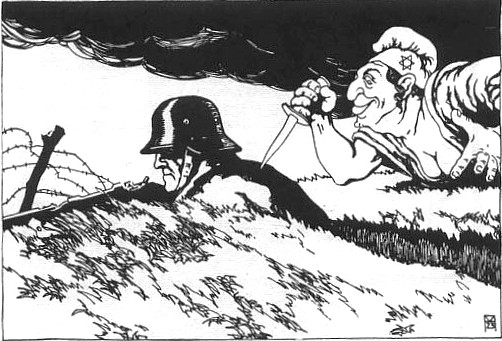
As Mr Schumer surely knows, the “stab in the back” is a favourite antisemitic trope, or more generally a reference to treacherous fellow citizens who are “behind us” because we think we can trust them, while our eyes are focused on the enemy across the border. They are the internal enemy, taking advantage of our attention focused on the external enemy.

1919 Austrian postcard.
In Schumer’s telling, Russia is the one on the right.

Now, Russia is a powerful nation, and I hope that the US has a reasonably cooperative diplomatic relationship to it, but I would never have thought it was a US ally.

So, what I want to know is, who screwed up and let the Russians have our backs?

Of course, we wouldn’t have this problem if Snowden (like Bradley Manning) was gay. Maybe we should stop giving security clearances to heterosexuals. It’s too easy for them to get asylum…

Politics and Plagiarism in Germany

There’s a new plagiarism scandal in the German Bundestag! [link in German]

“A nation reveals the nature of its political culture in its choice of scandals.” That’s not a maxim, but it ought to be. I first thought of it in 1992, when the German economics minister and vice-chancellor Jürgen Mölleman was forced to resign because of what was called the “Letterhead affair”: He had used departmental stationary to write in support of a relative’s business marketing to wholesalers a plastic chip that shoppers could keep in their wallets and use instead of a 1-mark coin as the deposit on a shopping trolley. “A clever idea!” he enthused. (“Eine pfiffige Idee.”) At the time I thought it reflected well on German politics, that they could hatch a scandal of such unrelieved banality; I compared it with Italy, where at the same time politicians in the pay of organised crime barely rated a mention in the national news unless underaged prostitutes were involved.

In the past couple of years the German government has been repeatedly roiled by plagiarism scandals. What? I hear you cry. How can a politician commit plagiarism? (Barack Obama refusing to admit that his first book was ghostwritten by Mumia Abu Jamal isn’t plagiarism.) Okay, there was Joseph Biden cribbing his stump speech from Neil Kinnock, but plagiarism is one of those crimes that only certain people can commit — like adultery, or violating the secrecy of the confessional — and those people are writers and academics. Politicians aren’t paid for original turns of phrase. Continue reading “Politics and Plagiarism in Germany”

Genetics and Democracy in the United Kingdom

What is the attraction of monarchy? According to the BBC headline “Kate Middleton in labour as world waits”. Really? The world? What exactly are they holding off on? Doesn’t the world have important things to do? (On the other hand, I’ve just discovered that The Guardian now has an alternative “republican” versions of its web site, with a report on rock star Morrissey in place of the princess’s labour pains. Just click to toggle.)

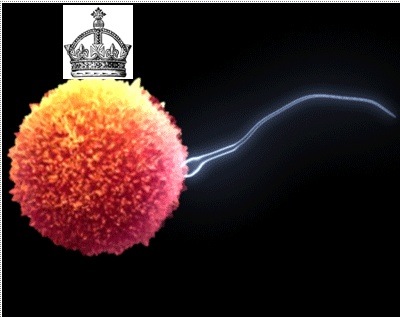
In honour of the newly announced maturation of the royal zygote into an air-breathing royal neonate — and its generous decision to head off a constitutional crisis by choosing to make do with only half its potential complement of X chromosomes — who is already predestined to rule over Britain, even while he is likely to be occupied less with affairs of state in the near future than with spitting up curdled royal milk from HRH the DoC’s royal mammary glands, I am reposting my proposal from two years ago, occasioned by the royal wedding. The proposal has been unaccountably ignored, despite its prospects for improving the democratic legitimacy of the monarchy. I can only infer that the neglect is due to a basic discomfort among the British elite with the innovations of modern science (unlike the innovations in, say, tax accounting, of which they tend to be avidly fond).

crowned_egg

With the impending union of male and female royalty breeders, there has been increasing tendency to cite Thomas Paine’s evergreen mockery:

The idea of hereditary legislators is as inconsistent as that of hereditary judges or hereditary juries; and as absurd as an hereditary mathematician, or an hereditary wise man; and as ridiculous as an hereditary poet-laureate.

(Paine never got to see the number of statistician children filling posts in some of today’s leading statistics departments, but the point is, in principle, well taken.) Seen as the monarchical version of an election — the keystone of the procedure by which a legitimate head of state is created — a Royal wedding certainly feels a trifle arbitrary. But this opposition to monarchy, though it wears the finery of modernity, has failed to keep up with advancing technology. True, it might formerly have been the case that the hereditary principle made the choice of head of state no different from a lottery (for which, see this suggestion). It seems impossible to unite the hereditary principle with the increasingly popular superstition that rulers should be selected by some non-random process, and that hoi polloi should have something to say about it. But now the following arrangements have been announced by the Palace (a particularly sodden corner of the palace wine cellar, to be precise)*:

  1. Following the wedding, a selection of at least 5 royal spermatozoa** will be extracted and fully sequenced by a specially selected team at the Royal Institution for Genetics Pedigree Studies. The secret method (which, in a nod to popular taste, does use beer as a reagent) has been designed to be maximally non-destructive.
  2. The sequences will published on the website princesperm.gov.uk. The public will have 5 days to register and vote for the one that they prefer be invited to form their new ruler.
  3. The elected sperm will be invited in the first instance to inseminate the royal egg. Should it fail in its attempt, the second-place sperm will be sent in. In the case of a repeat failure, a national referendum will be held to determine the correct voting procedure.

* It may be argued that this election proposal, being purely fictional and even farcical, has no bearing on the justification or not of the British monarchy. A dangerous argument indeed, for those who would dispense with fiction and farce would leave central pillars of the British constitutional order bereft of all foundation.

** Why are the future queen’s eggs not also sequenced? Choice of the ovum is a royal prerogative, cf.  Blackstone, Commentaries on the Laws of England, v. 5, section 113 (Oxford 1765-1769).

purim_royal_wedding

Extradition for thee but not for me

CIA agent Robert Lady, convicted of kidnapping and sentenced to 7 1/2 to 9 years in prison in Italy, has been arrested in Panama under an international arrest warrant. For some reason, though, the Panamanians have not held him, but have allowed him to board a plane bound for the US.

He probably think he has cleverly eluded justice. The joke is on him, though, because as we all know, the US is now a passionate advocate of international cooperation in arresting international fugitives, and of the rigorous enforcement of extradition treaties. So we can be sure that Mr Bob (as the Italian press has apparently taken to calling him) will be on his way back to Italy in handcuffs soon. Unless… But it can’t be that kidnapping (and abetting torture) is seen as a less weighty crime than publishing embarrassing political secrets. Can it?

Privacy rights in Germany

Unlike the US, Germany has a constitutional court that doesn’t kowtow as soon as the government yells “National Security”. Whereas the US Supreme Court has chosen to rewrite Catch 22 as a legal judgement, saying effectively that no one has standing to challenge secret government surveillance programs, because they are secret, hence no one can prove (using information the government will allow to appear in open court) that they have been affected.

Deutschlandfunk’s science programme Forschung Aktuell has been reporting this week on problems of information technology, security, and privacy, and today I learned (transcript in German)

In 2001 the police chief of Baden-Württemberg Erwin Hetger demanded a programme of advance data storage, by which all connection data of web surfers in Germany would be stored for six months.

“I think we cannot allow the Internet to become effectively a law-free zone. Hence my clear and unambiguous recommendation: Whoever moves about on the Internet must be willing to accept that his connection data are stored for a fixed period of time.”

The Bundestag did, in fact, pass such a law in 2007. But in 2010 the Constitutional Court annulled the law.

While such advance data storage is not necessarily impossible under the German constitution, the constitutional requirements for such an action would be very strict, and were not satisfied by the law that was passed.

The president of the Constitutional Court Hans-Jürgen Papier specifically emphasised that if such data were to be stored, it would have to be done in a more secure way than the law had required.

The comparison of this process — where the basic parameters of privacy rights and government snooping are set by the normal democratic process of legislatures passing laws that are then reviewed in publicly accessible court decisions — just makes clear how supine the US courts and Congress have been, as has been the UK parliament.
Continue reading “Privacy rights in Germany”

Blackmailing Uncle Sam

Glenn Greenwald, the Guardian journalist responsible for the NSA disclosures, may be going a bit too far into spy noir territory. In a recent interview he announced that

Snowden has enough information to cause harm to the U.S. government in a single minute than any other person has ever had. The U.S. government should be on its knees every day begging that nothing happen to Snowden, because if something does happen to him, all the information will be revealed and it could be its worst nightmare.

I am not making moral judgements. I find this rhetoric understandable, though clearly, whatever Snowden’s motives — and no one in politics has unmixed motives, nor should they be expected to have — by placing this dangerous information in the hands of persons unknown with some kind of dead-man’s trigger, he’s clearly increased the likelihood of it being released accidentally, which is quite a responsibility to take upon oneself.

But I’m thinking about Greenwald’s position. So far, despite the wish of some grandstanding congressmen to criminalise his role, Greenwald has clearly been a journalist. The Obama administration seems eager to draw some kind of line between “real journalists” and everyone else to prevent his administration’s witchhunting from completely gutting press freedom, so they might have played along. But they seem eager to prosecute national security leaks to the extent that they can find a bright line separating a given case from the bulk of journalism. Greenwald has given it to them, and I would be surprised if there were not a secret grand jury preparing charges against him for attempting to pervert the course of justice, or whatever the US federal term is for that.

However he meant it, Greenwald’s announcement sounds an awful lot like the language of blackmail, and that’s surely plenty of a hook for them to hang him on. This moves him from being a reporter to being a participant or, as I’m sure they’ll phrase it in the indictment, a co-conspirator. Blackmailing the feds is a pretty heavy game to play.

[Update 7/15: Greenwald has commented on his remarks, and it definitely looks as though Reuters has gone out of its way to frame a defence of Snowden’s motivations — he has held on to a lot of information that could be of great value to enemies of the US which he has not divulged, though he could reap significant rewards for it — in the theatrical argot of a mobster’s shakedown. That doesn’t change the fact that it’s not hard to imagine creative prosecutors twisting this story into a noose for an uncomfortable journalist; and that Snowden is playing a very dangerous game — just to make one obvious point, not everyone who might be in a position to harm him is opposed to his info bomb being detonated. Beginning with his current hosts…)
Continue reading “Blackmailing Uncle Sam”

Framing the question on electronic surveillance

Quinnipiac has published a poll purporting to find the following facts:

  • 55 percent of Americans say Edward Snowden is a “whistle-blower”, as opposed to 34 percent calling him a “traitor”;
  • voters say 45 – 40 percent the government’s anti-terrorism efforts go too far restricting civil liberties, a reversal from a January 10, 2010 survey … when voters said 63 – 25 percent that such activities didn’t go far enough to adequately protect the country.
  • While voters support the phone-scanning program 51 – 45 percent and say 54 – 40 percent that it “is necessary to keep Americans safe,” they also say 53 – 44 percent that the program “is too much intrusion into Americans’ personal privacy”.

Now, the most striking thing to me is that 88 percent of the people surveyed in January 2010 thought they knew enough about the government’s intrusion on personal privacy to even formulate an opinion — in particular, that 63 percent thought they knew enough about the scope to say that it didn’t go far enough.

But even more interesting is the formulation of the question that got 54% to agree that “the phone-scanning program” is “necessary”. (It is noteworthy that at least 4% of those surveyed both support the program and believe that it is “too much intrusion”. They must have a different concept than I have of either the word “support” or “too much”.) What they were asked was

Do you support or oppose the federal government program in which all phone calls are scanned to see if any calls are going to a phone number linked to terrorism?

Now, if you put it that way, I’d kind of support it myself. “Scanning” sounds pretty innocuous, and “phone numbers linked to terrorism” sound pretty ominous. But that’s only a small part of what’s being done. They are receiving all metadata — that’s a lot more than just a phone number — and storing them, presumably, forever. They are data-mining to try to identify patterns. They are already, or are preparing to, store the content of all communications, so they may be examined in depth if there is sufficient reason in the future.

And how much of this is this about terrorism? We don’t know. And even if it is about terrorism right now, it won’t take long before enthusiastic or corrupt government officials think of all kinds of other legitimate purposes of government that could be promoted by just breaking down some of the petty bureaucratic restrictions on use of the data.

To put it in the crassest terms: This sort of unfocused big-data espionage may be marginally useful for catching terrorists, but it seems certain to be far more useful for pressuring or destroying political opponents of the anti-terror policies.

Though this be madness, yet there is method in it

One of the key lessons of emotional game theory is that madness — or, at least, the convincing appearance of madness, which may amount to the same thing — can be an effective strategy. You can win some otherwise unwinnable games (Chicken being a favourite example) by convincing your opponent that you are too fixated, angry, or suicidal to be persuaded by threats and/or appeals to what may seem to be mutual best interests.

This seems to me the only way to understand the response of the US government to Edward Snowden. If the most recent news reports are to be believed, the US has somehow persuaded European governments to practically kidnap the president of Bolivia, because they believe Snowden might be on the presidential plane, flying to asylum. The lesson to future whistleblowers is clear: There’s no point trying to game out the usual protocols, the law, or even what might seem to be too much trouble or too embarrassing for the Americans. If you embarrass the US government, and particularly its clandestine services, they will go full berserker.

That was something of the sense I had after 9/11: The torture, the pointless war in Iraq, it wasn’t so much a means to an end, as a direct demonstration that the US was not going to respond in any proportionate, rational, or even legal manner.

The actions of the Europeans are pretty shameful. At the same time that they are howling about the crimes that Snowden has uncovered, they are conniving at US attempts to treat him as a criminal, rather than a political dissident. Germany, among others, has dismissed Snowden’s application for asylum by saying that he first needs to get to Germany before it can be considered; but, of course, they won’t let him come now that the US has revoked his passport.

If you don’t have anything to hide, why don’t you speak English?

The NSA documents that have gotten the most attention in the German press are the ones that divide the world into 3 categories of reliability (and hence relative freedom from US espionage). Class 1 is the US itself (though the Snowden affair should lead them to question their own reliability). Class 2 comprises the UK, Canada, Australia, and New Zealand. Class 3, subject to presumably no restrictions and given no trust, includes everyone else.

Naturally, the Europeans are offended to be in the same category as the Chinese and Iranians, but really, you have to wonder why they’re encoding all their communications in these weird non-English forms of communication. Trustworthy partners speak plain English!